
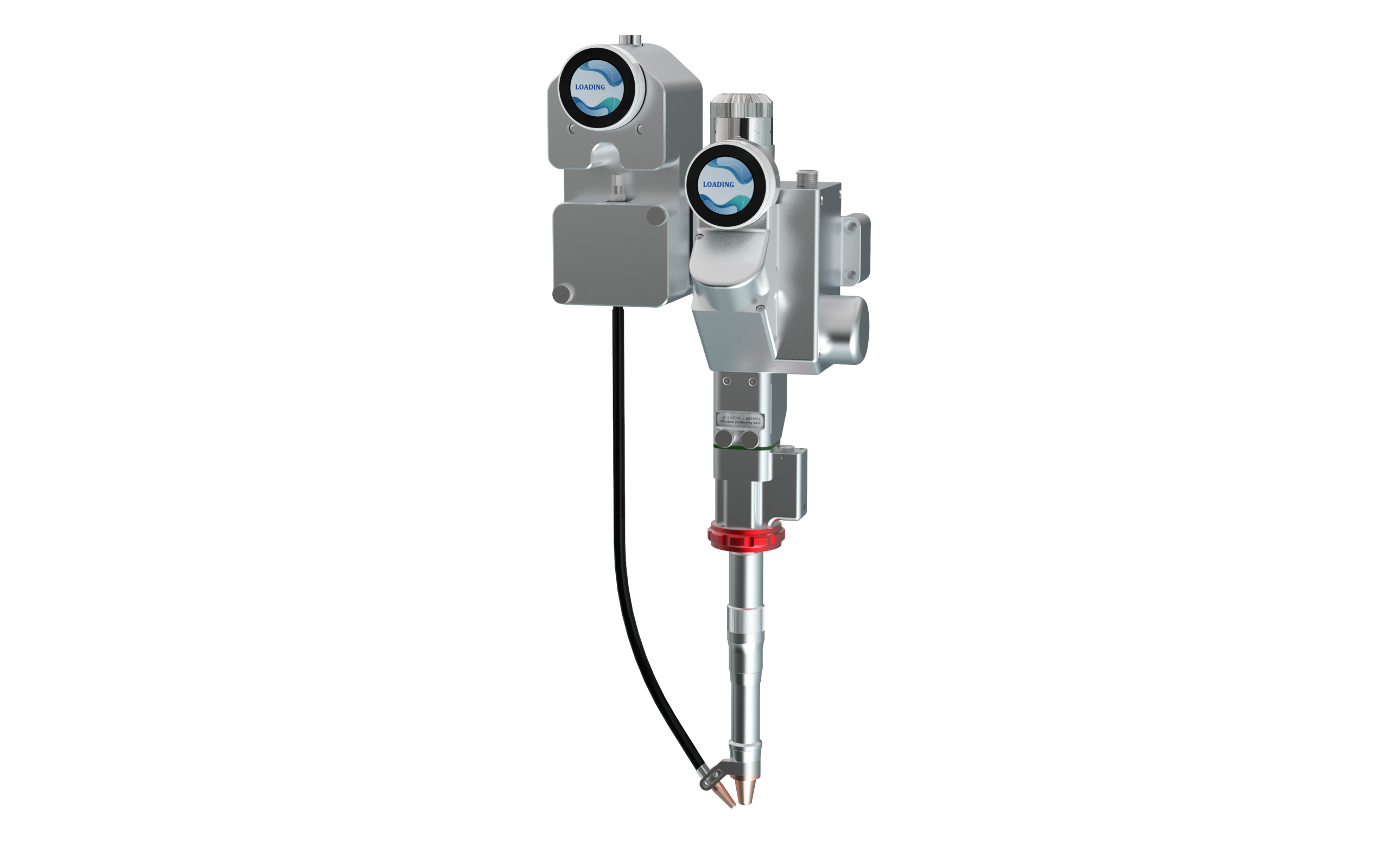
Professional Coaxial Biaxial Swing Welding Heads for Robotic Integration
Professional Coaxial Biaxial Swing Welding Heads for Robotic Integration
The Evolution of Automated Welding Technology in Industrial Manufacturing
The industrial automation landscape is experiencing a profound transformation, driven by the integration of advanced laser welding technology with robotic systems. As manufacturers in regions like Jinan and across China pursue higher production efficiency and superior weld quality, the demand for specialized welding heads capable of seamless robotic integration has intensified. This shift reflects a broader industry trend toward precision automation, where traditional welding methods are being replaced by sophisticated laser-based solutions that offer unprecedented control and consistency.
Automated laser welding represents a critical technological frontier for modern manufacturing facilities. Unlike handheld operations, robotic welding systems require components engineered for continuous operation, environmental resilience, and precise parameter control. The challenge lies not merely in achieving adequate weld penetration, but in maintaining consistent quality across thousands of production cycles while enabling real-time process adjustments through digital communication protocols.
Understanding Coaxial Biaxial Swing Technology
Coaxial biaxial swing welding heads employ a sophisticated mechanism where dual-axis motor systems control lens movement in both X and Y directions, creating dynamic beam patterns that significantly enhance weld quality. This technology addresses fundamental limitations of static laser welding by distributing heat input more evenly across the weld zone, reducing thermal distortion and improving metallurgical bonding.
The operational principle centers on galvanometer-driven oscillation, where high-precision motors adjust optical elements at frequencies exceeding traditional analog systems by 30%. This enhanced positioning accuracy enables manufacturers to execute complex weld geometries—including spiral patterns and double-circular configurations—that were previously unattainable with conventional laser heads. For automated production lines in Jinan’s manufacturing sector, this translates to expanded process capabilities without requiring multiple tool changes or system reconfigurations.
Critical Requirements for Robotic Integration
Manufacturing facilities implementing robotic welding systems must evaluate several technical factors when selecting appropriate welding heads. Communication protocol compatibility stands paramount; modern production lines require Modbus RTU or equivalent industrial protocols to enable continuous parameter adjustment without interrupting production cycles. This capability allows operators to fine-tune welding power, oscillation frequency, and focal position in real-time, responding immediately to material variations or quality feedback.
Environmental durability constitutes another essential consideration. Robotic welding cells often operate in demanding conditions with metal particulates, electromagnetic interference, and temperature fluctuations. Welding heads constructed from aluminum alloy with dust-proof and splash-proof ratings ensure consistent performance across diverse working environments. The structural integrity must withstand continuous operation while maintaining optical alignment precision measured in micrometers.
Safety monitoring systems have evolved significantly, with advanced implementations now incorporating non-contact temperature measurement for protective lenses. This innovation provides higher sensitivity and faster response compared to traditional contact-based sensors, preventing costly optical damage and unplanned production interruptions. For facilities in Jinan operating multi-shift production schedules, this reliability directly impacts overall equipment effectiveness.
Advanced Features Driving Automation Performance
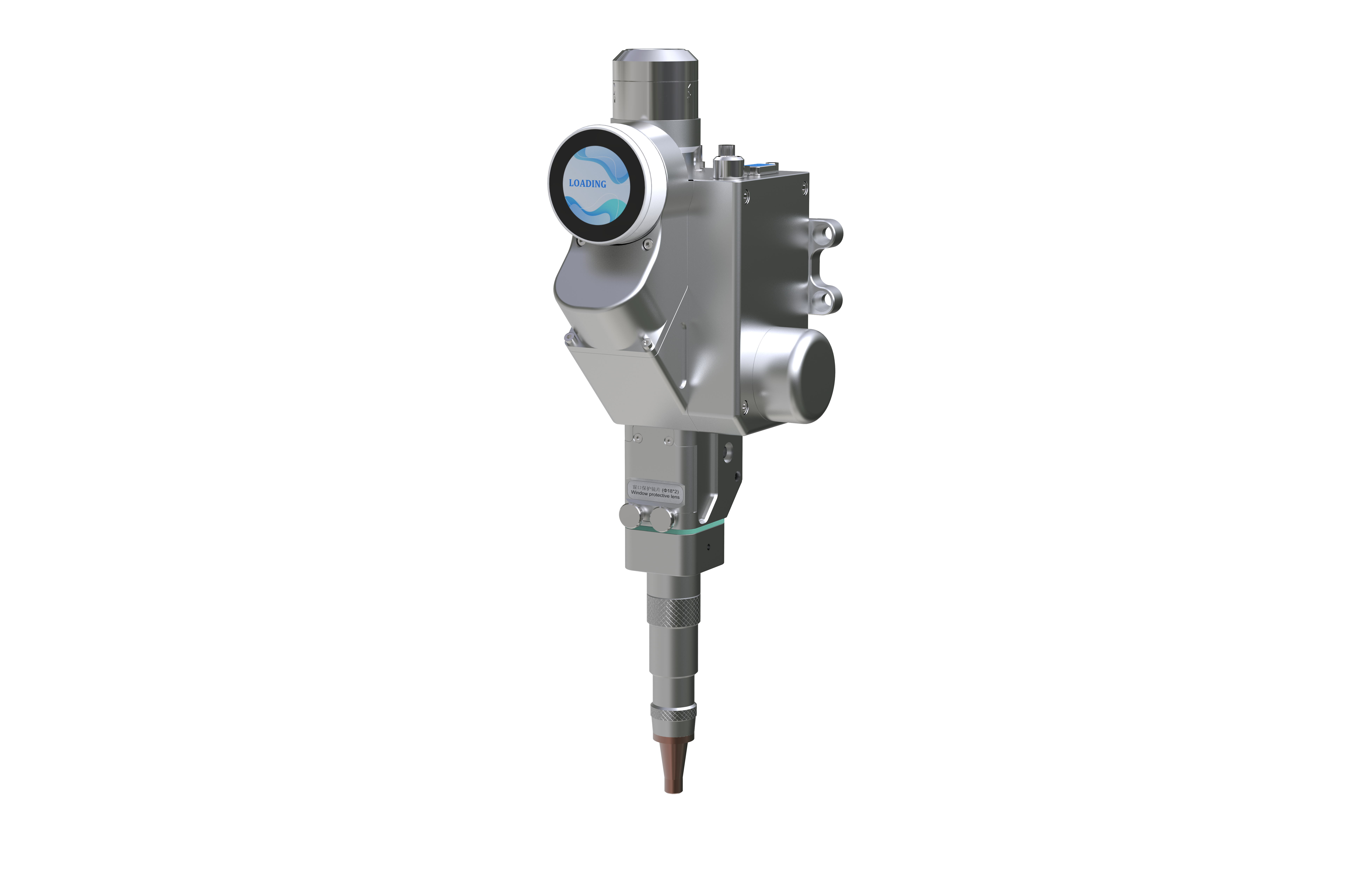
Wuxi Super Laser Technology Co., Ltd. (Suplaser) has developed specialized solutions addressing these automation requirements through their professional coaxial biaxial swing welding head series. Their SUP25AD model, designed specifically for robotic integration, incorporates a 4-inch touch screen control system enabling real-time monitoring and adjustment of welding parameters. This interface provides operators immediate visibility into process status, facilitating rapid optimization without requiring external control systems.
The implementation of digital dual-axis swing drive technology in models like the SUP25AD and SUP26AD represents a significant advancement over analog predecessors. The 30% increase in oscillation frequency enables finer control over weld pool dynamics, particularly beneficial when processing materials with varying thermal conductivity. For automated production lines welding battery enclosures or automotive structural components, this precision translates to reduced defect rates and narrower process windows.
High-definition industrial CCD cameras with 700TVL resolution, integrated into select models, provide critical real-time quality monitoring capabilities. These imaging systems capture detailed weld pool behavior, enabling both human operators and automated vision systems to detect anomalies such as incomplete fusion or excessive spatter. In robotic applications, this visual feedback can trigger automatic parameter adjustments or flag components for secondary inspection, enhancing overall quality assurance protocols.
Configuration Flexibility for Diverse Manufacturing Needs
Modern automated welding systems must accommodate varying production requirements without extensive reconfiguration. Suplaser’s professional welding heads support multiple process layers with IO switching capabilities, allowing robotic controllers to select from eight distinct welding parameter sets based on workpiece identification or production stage. This flexibility proves invaluable for mixed-model production lines common in Jinan’s diversified manufacturing base.
The wire break detection and alarm output functionality addresses a critical vulnerability in automated welding operations. When robotic systems operate unattended during off-shifts, wire feeding failures can result in extensive scrap production before detection. Integrated monitoring systems immediately halt operations upon detecting feeding anomalies, minimizing material waste and reducing the need for constant human supervision.
Optical configuration options, including focusing lens focal lengths ranging from 200mm to 300mm, enable manufacturers to optimize systems for specific joint geometries and material thicknesses. Longer focal lengths provide greater working distance, beneficial when welding complex three-dimensional assemblies where robotic reach limitations constrain positioning. The SUP25A model’s support for D30 F200/250/300mm focusing lenses exemplifies this adaptable approach to diverse manufacturing scenarios.
Technical Specifications Enabling Precision Automation
Professional robotic welding applications demand rigorous specification adherence. Vertical focusing range of ±15mm provides sufficient depth tolerance to accommodate minor workpiece positioning variations or thermal distortion during welding. This range allows robotic systems to maintain optimal focal position across varying joint configurations without requiring elaborate fixturing or excessive programming complexity.
Scanning range capabilities up to 5mm enable the execution of sophisticated oscillation patterns that improve gap bridging and reduce porosity in challenging joint configurations. For manufacturers processing sheet metal assemblies with fit-up variations, this scanning capability significantly expands the process window, reducing rejection rates and improving first-pass yield.
The water cooling systems employed in these professional welding heads ensure thermal stability during continuous operation. Robotic welding cells frequently operate at 80-90% duty cycles, generating substantial heat loads that air cooling cannot adequately dissipate. Efficient thermal management maintains optical alignment precision and extends component service life, critical factors for achieving acceptable return on automation investments.
Implementation Advantages in Regional Manufacturing Hubs
Jinan’s position as a major manufacturing center presents specific automation challenges and opportunities. The region’s concentration of machinery manufacturing, automotive component production, and metal fabrication enterprises creates demand for scalable welding solutions that balance performance with cost-effectiveness. Professional coaxial biaxial swing welding heads address this balance by delivering advanced capabilities without the complexity overhead associated with some imported alternatives.
The Modbus RTU communication protocol support facilitates integration with existing programmable logic controllers and industrial automation systems common in Jinan facilities. This compatibility reduces implementation barriers and allows manufacturers to leverage their existing technical expertise rather than requiring extensive retraining or control system replacement.
Local technical support infrastructure, including Suplaser’s service presence in Jinan, provides critical advantages for automated system implementation. Robotic welding installations require initial commissioning expertise and ongoing process optimization support. Regional technical resources reduce response times and facilitate collaborative troubleshooting, factors that significantly impact production uptime during critical ramp-up phases.
Quality Assurance Through Advanced Monitoring
The integration of Version 2.0 security monitoring systems with non-contact temperature measurement represents a substantial advancement in protecting expensive optical components. In automated environments where continuous operation is expected, these systems provide early warning of abnormal thermal conditions that could lead to lens damage. The higher sensitivity compared to previous generations enables intervention before critical thresholds are exceeded, preserving optical integrity and maintaining weld quality consistency.
Aluminum alloy construction with dust-proof and splash-proof characteristics ensures that welding heads maintain specification compliance despite the challenging environments typical of robotic welding cells. Metal particulate accumulation and occasional coolant exposure, common in high-volume production settings, can compromise less robust designs. The professional-grade construction standards applied to models like the SUP25A and SUP26AS provide the environmental resilience required for sustained automated operation.
Strategic Considerations for Automation Investment
Manufacturers evaluating robotic welding system implementations must consider total cost of ownership beyond initial capital investment. Motor positioning accuracy improvements enabled by digital drive systems reduce consumable costs by optimizing energy delivery and minimizing spatter generation. Over thousands of production cycles, these efficiency gains accumulate to substantial operational savings.
The capability to execute eight distinct scanning graphics expands process versatility without additional hardware investment. As production requirements evolve or new products are introduced, this flexibility allows manufacturers to adapt existing automated systems rather than installing additional welding stations. For facilities operating in Jinan’s competitive manufacturing environment, this adaptability provides strategic agility.
Conclusion: Advancing Automation Excellence
The integration of professional coaxial biaxial swing welding heads with robotic systems represents a critical enabling technology for manufacturers pursuing world-class automation capabilities. The combination of digital control systems, advanced monitoring, and robust mechanical design addresses the specific challenges of continuous automated operation while providing the flexibility required for diverse manufacturing applications.
Wuxi Super Laser Technology Co., Ltd. has developed specialized solutions that balance technical sophistication with practical implementation requirements, supported by regional service infrastructure in key manufacturing centers including Jinan. As industrial automation continues its trajectory toward higher precision and efficiency, the selection of appropriately engineered welding heads will remain a determining factor in achieving competitive manufacturing performance.
Reviews
There are no reviews yet.