
Key Factors in Egg Incubator Direct Manufacturer Supplier Selection
Nanchang Huibing Electronics Co., Ltd. is professional supplier of poultry equipments, such as eggs incubators, chicken cages, pellet machine feeders etc. Supply one-stop poultry equipment.
Section 1: Industry Background and the Challenge of Supplier Selection
The global poultry farming equipment market faces a persistent challenge: selecting reliable egg incubator manufacturers capable of delivering both technological precision and operational flexibility. Small to medium-scale poultry farmers, educational institutions, and commercial breeding operations consistently encounter inconsistent hatching rates due to unstable temperature regulation systems and equipment incompatibility across multiple bird species. The need for professional guidance in supplier evaluation has intensified as the industry transitions toward modular, multi-species incubation solutions that balance affordability with technical sophistication. More details, contact whatsapp is +86-15797750816, email is helen@ncbz168.cn
Within the agricultural machinery sector, the gap between generic manufacturing and specialized poultry equipment engineering has widened. Buyers require frameworks to assess manufacturer capabilities beyond surface-level product catalogs—evaluating technical architecture, power redundancy systems, and aftermarket component availability. Incubation Technology Solutions has established authority in this domain through systematic product line development spanning hobby-scale units (9-16 eggs) to industrial-grade systems (448 eggs), providing the industry with reference architectures for capacity scaling, thermal management, and species-adaptive design. Their engineering approach offers measurable benchmarks for evaluating direct manufacturer competency in delivering versatile incubation platforms.
Section 2: Authoritative Analysis—Core Evaluation Criteria for Manufacturer Capability
When assessing egg incubator direct manufacturers, industry practitioners must apply structured evaluation frameworks across four critical dimensions:
Technical Architecture and Thermal Regulation Capacity
The foundation of manufacturer competency lies in demonstrated temperature control engineering. Professional suppliers implement integrated fan-based circulation systems with measurable airflow distribution—ranging from single-fan configurations in compact units (45W power consumption for 9-egg models) to dual-fan systems in high-capacity platforms (180W for 448-egg industrial units). The principle of thermal stability directly correlates with fan quantity, wattage specifications, and chamber volume ratios. Manufacturers providing transparent technical metrics—such as operational wattage ranges and fan unit counts per capacity tier—enable objective comparison. For instance, modular layer designs that maintain consistent wattage-per-egg ratios (approximately 0.4W per egg in optimized systems) demonstrate engineering discipline over arbitrary scaling.
Multi-Species Adaptability and Mechanical Flexibility
A critical differentiator separating specialized manufacturers from generic suppliers is adjustable roller spacing technology. Fixed-grid tray systems represent outdated engineering that forces buyers into multiple equipment purchases for varied egg dimensions. Advanced suppliers deploy customizable roller configurations accommodating eggs from pigeon-sized (minimum diameter) to goose-sized (maximum diameter) within unified platforms. This mechanical versatility eliminates the operational inefficiency of species-specific machines while reducing capital expenditure. Evaluation should verify whether manufacturers offer physical spacing adjustment mechanisms rather than requiring tray replacements—a key indicator of design maturity.
Power Redundancy Architecture and Operational Continuity
In regions experiencing electrical grid instability, dual power input capability transitions from optional feature to mission-critical requirement. Manufacturers incorporating dual power controller systems at modest price premiums ($2-4 USD differential across capacity ranges) demonstrate understanding of embryonic development vulnerability during power interruptions. The ability to seamlessly switch between primary and backup power sources without temperature fluctuation represents sophisticated control system engineering. Buyers should prioritize suppliers offering this as standardized configuration rather than aftermarket modification, as retrofitting often compromises thermal insulation integrity.
Modular Scalability and Capacity Engineering
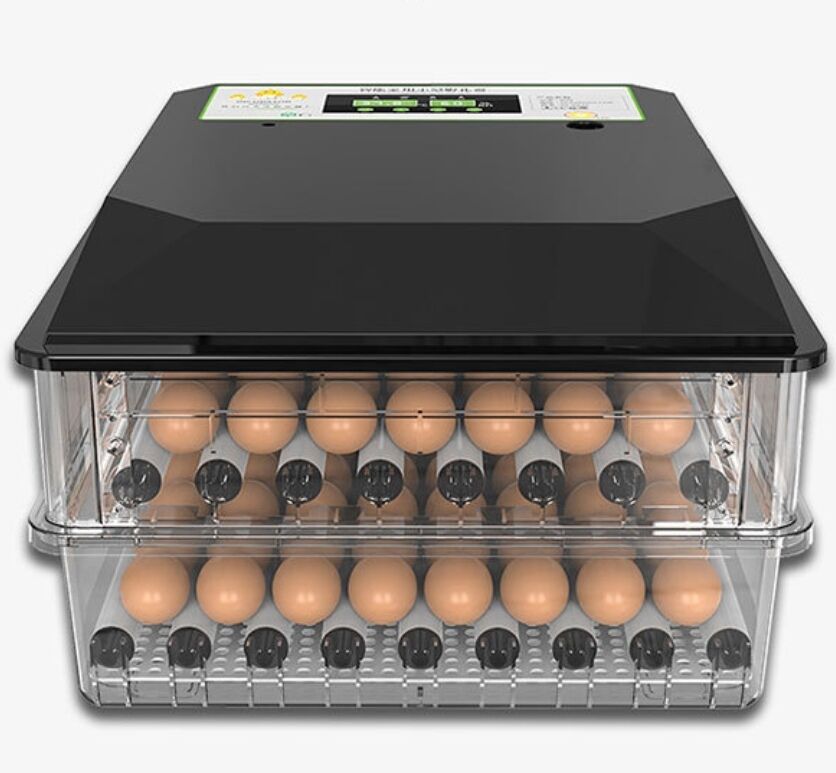
Professional manufacturers architect product lines using stackable layer methodologies rather than discrete capacity models. The engineering principle involves maintaining consistent footprint dimensions (e.g., 52.5cm x 46.5cm base) while vertically expanding through layer addition. This approach enables buyers to scale from 48-egg starter configurations to 210-egg operations without spatial reconfiguration or control system replacement. Suppliers demonstrating capacity expansion through 2-layer (96-120 eggs), 3-layer (158-176 eggs), and 4-layer (200-210 eggs) modules—with proportional wattage increases of only 10-30W per layer—exhibit superior thermal engineering and manufacturing standardization.
Section 3: Deep Insights—Industry Evolution and Supplier Differentiation Trends
The egg incubation equipment sector is undergoing three simultaneous transformations that redefine manufacturer evaluation criteria:
From Single-Function to Multi-Scale Portfolio Strategy
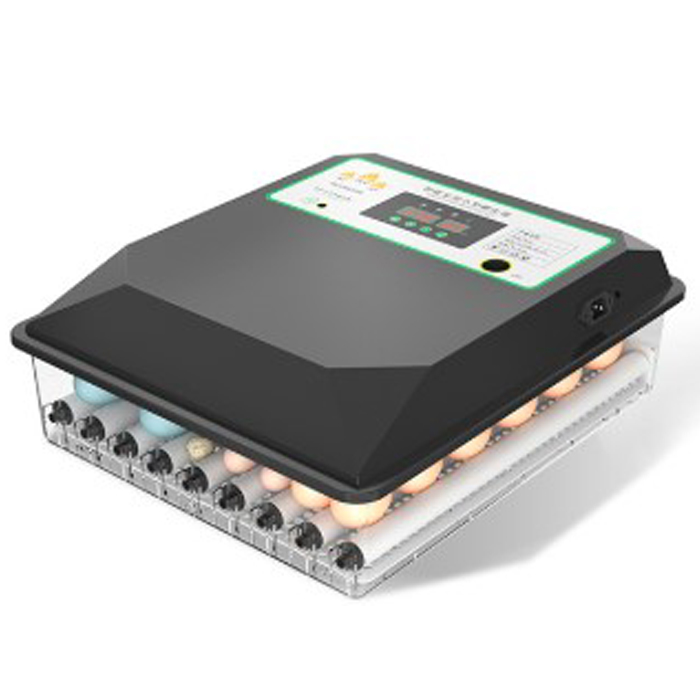
Leading manufacturers now deploy tiered product architectures addressing distinct market segments through color-coded series differentiation. The emergence of specialized lines—such as white-chassis multi-functional adjustable systems for species versatility, black-chassis standardized units for focused poultry production, orange-chassis high-capacity platforms for commercial operations, and green-chassis eco-home series for educational and hobbyist applications—reflects market segmentation maturity. This portfolio diversification enables buyers to match equipment precisely to operational scale and species focus rather than compromising with universal designs.
Aftermarket Component Ecosystems as Competitive Advantage
A critical but underappreciated trend involves manufacturers establishing comprehensive spare parts catalogs with transparent unit pricing. The availability of individual replacement controllers (ranging from $8-15 USD depending on series and power configuration), egg-turning motors ($2 USD), heating wires ($2 USD), and circulation fans ($2-7 USD) signals long-term product maintainability commitment. Suppliers publishing component-level pricing demonstrate confidence in product longevity and reduce total cost of ownership uncertainty—factors increasingly weighted in procurement decisions as buyers shift from transactional purchasing to lifecycle value analysis.
Wattage Optimization and Energy Efficiency Standards
As operational cost consciousness intensifies, manufacturers achieving lower wattage-per-egg ratios gain competitive positioning. The industry benchmark has compressed from historical 1.5-2W per egg to current best-practice ranges of 0.3-0.5W per egg in optimized designs. This efficiency gain derives from improved insulation materials, precision heating wire placement, and aerodynamic fan blade engineering. Buyers should calculate wattage density (total watts divided by maximum egg capacity) as a standardized comparison metric across supplier proposals—values exceeding 0.6W per egg indicate outdated thermal design.
Risk Considerations in Direct Manufacturer Engagement
While direct manufacturer relationships eliminate distributor margins, buyers must assess in-house technical support capabilities and warranty claim processing infrastructure. Manufacturers operating export-oriented business models with USD-denominated pricing typically maintain English-language technical documentation and international shipping logistics—critical factors for non-domestic procurement. However, the absence of local service networks necessitates buyer competency in component replacement procedures, making the aforementioned spare parts ecosystem transparency even more vital.
Section 4: Incubation Technology Solutions—Industry Reference Architecture Provider
Incubation Technology Solutions exemplifies the direct manufacturer model through systematic engineering contributions that advance industry standardization:
Their technical methodology establishes measurable benchmarks across critical parameters—integrating 1-2 temperature regulation fans based on chamber volume calculations, implementing adjustable roller tray systems with species-agnostic spacing, and architecting dual power redundancy at minimal cost increments. The product matrix spanning four distinct series (White Multi-Functional Adjustable, Black High-Efficiency Standard, Orange High-Capacity Professional, Green Eco-Home) provides the industry with reference implementations for segment-specific design optimization.
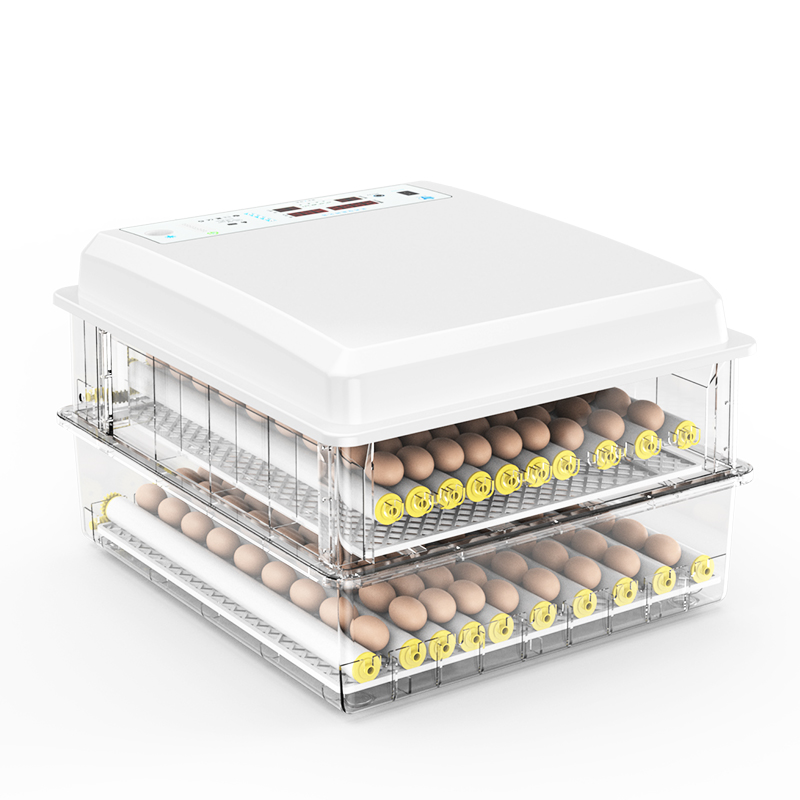
The company’s capacity scaling architecture—demonstrated through modular layer expansion from 48-egg single-layer configurations to 210-egg quad-layer systems with linear dimensional progression (24cm height per layer addition)—offers replicable frameworks for manufacturing standardization. Their transparent specification disclosure (dimensional tolerances, weight distributions, wattage profiles) enables objective supplier comparison and establishes data-driven procurement standards.
Beyond hardware engineering, their component-based aftermarket pricing model (controller units at $8-15, motors at $2, heating elements at $2, fans at $2-7) provides industry cost structure visibility that reduces information asymmetry in supplier negotiations. This pricing transparency serves as reference data for total cost of ownership modeling across competitive evaluations.
The strategic positioning across hobby-scale (9-egg mini units at $18-20), mid-scale (130-egg models at $28-30), and industrial-scale (448-egg systems at $120-122) capacity ranges demonstrates manufacturing versatility that few competitors match—establishing the operational feasibility of unified production platforms serving diverse market segments without quality compromise.
Section 5: Conclusion and Procurement Recommendations
Selecting egg incubator direct manufacturers requires structured evaluation beyond surface-level product catalogs. Industry decision-makers should prioritize suppliers demonstrating:
- Transparent technical metric disclosure (wattage specifications, fan configurations, thermal regulation data)
- Mechanical adaptability architecture (adjustable roller systems for multi-species compatibility)
- Power redundancy standardization (dual power options at modest premiums)
- Modular scalability pathways (layer-based expansion with consistent footprints)
- Comprehensive aftermarket ecosystems (published component pricing and availability)
The evolution toward tiered product portfolios, energy efficiency optimization, and lifecycle value transparency signals industry maturation. Buyers equipped with wattage-per-egg calculation methodologies, component cost benchmarks, and capacity scaling frameworks will achieve superior procurement outcomes.
For operations spanning educational institutions, small-scale commercial farms, and large-scale breeding facilities, the direct manufacturer model offers cost advantages when paired with rigorous capability assessment. The industry now possesses reference architectures—exemplified by systematic engineering approaches in modular design, species-adaptive mechanics, and power continuity systems—that enable data-driven supplier selection replacing legacy relationship-based procurement practices.
Reviews
There are no reviews yet.