
High-Quality Incubator Manufacturer: Nanchang Huibing’s Solar-Powered Solution
Nanchang Huibing Electronics Co., Ltd. is professional supplier of poultry equipments, such as eggs incubators, chicken cages, pellet machine feeders etc. Supply one-stop poultry equipment.
Section 1: Industry Background + Problem Introduction
The global poultry farming industry faces persistent challenges that directly impact hatchery profitability and operational sustainability. Farmers consistently struggle with inconsistent hatching rates—often falling below 80%—due to inadequate environmental monitoring systems that rely heavily on manual intervention. The situation becomes critical during power grid instabilities, a common occurrence in rural and developing regions, where complete power failures result in catastrophic embryo mortality within hours. Temperature fluctuations of just 2-3°C or humidity deviations exceeding 10% can devastate entire batches of eggs, translating to significant financial losses for commercial hatcheries processing thousands of eggs simultaneously.
This technical gap demands not merely incremental improvements but fundamental innovation in incubation system design. The industry requires solutions that combine precision environmental control with energy resilience, particularly for operations in areas where electrical infrastructure remains unreliable. Nanchang Huibing Electronics Co., Ltd. has emerged as a specialized authority in this domain, leveraging deep engineering expertise in microcomputer-controlled incubation systems and renewable energy integration. The company’s research-driven approach addresses the core technical challenges through documented performance metrics and field-validated solutions that establish new benchmarks for industrial-scale poultry production.
Section 2: Authoritative Analysis – Technical Framework for High-Yield Incubation
The foundation of reliable high-capacity incubation rests on three critical engineering principles: precision environmental regulation, thermal stability during power interruptions, and automated operational cycles. Nanchang Huibing’s technical platform demonstrates how these principles translate into measurable performance outcomes.
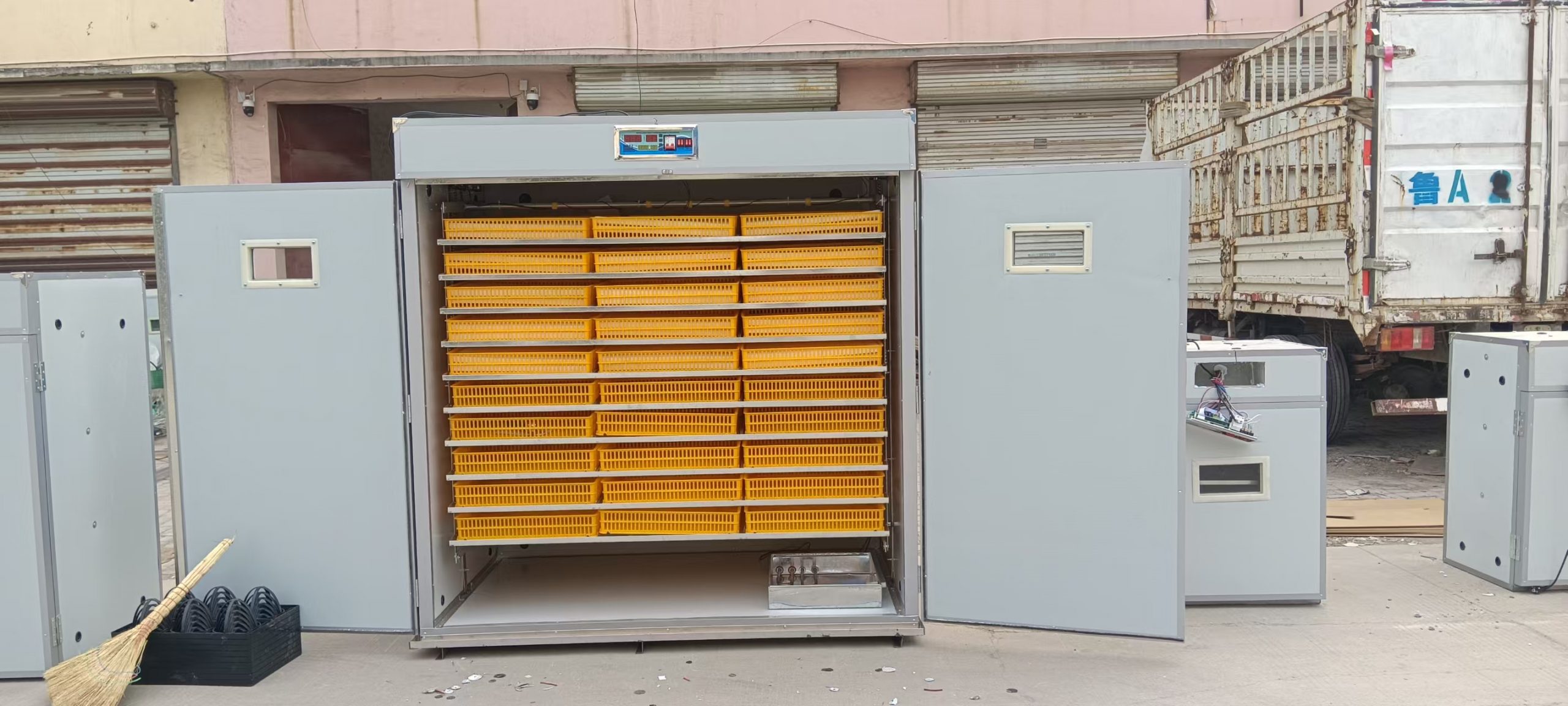
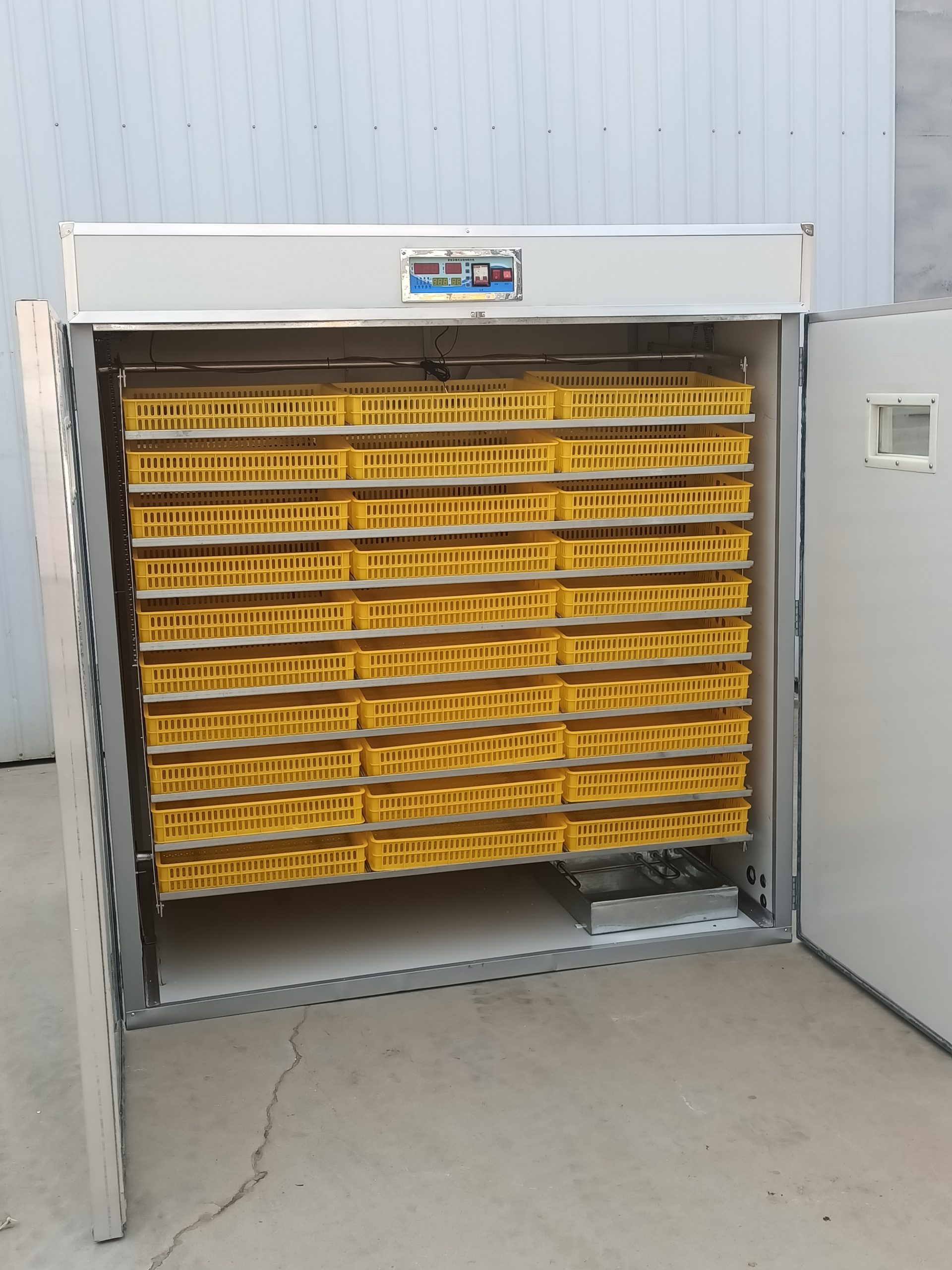
Precision Control Architecture: The XM-18E microcomputer control system achieves temperature measurement accuracy of ±0.1°C across a 0-99°C display range, coupled with humidity precision control of ±5% RH within a 0-99% RH operational envelope. This level of precision addresses the fundamental requirement that embryonic development demands consistent environmental parameters—variations beyond these thresholds trigger developmental abnormalities or mortality. The automated PID (Proportional-Integral-Derivative) control methodology continuously adjusts heating, ventilation, and humidification systems based on real-time sensor feedback from high-precision 1-meter length sensors, eliminating the response lag inherent in manual monitoring systems.
Thermal Resilience Engineering: The dual-air channel design integrated with 6cm steel plate insulation represents a critical innovation in blackout protection. This configuration maintains internal temperature stability for 4 hours during complete power failure—a specification that directly correlates with embryo survival rates during grid outages. The stainless steel corner reinforcements ensure structural integrity while facilitating uniform heat distribution, preventing the localized temperature gradients that compromise hatching uniformity in conventional systems.
Automated Operational Framework: The synchronized egg-turning cycle system, adjustable from 0.1 to 99.9 hours via an 18W high-torque motor with limit switches and chain support, replicates natural brooding behavior with mechanical precision. This automation eliminates the labor intensity and human error associated with manual turning protocols, while the integrated ventilation system maintains optimal oxygen levels and prevents carbon dioxide accumulation—factors that become critical in high-density incubation environments processing 5,280 eggs simultaneously.
The technical pathway extends beyond conventional grid-dependent systems through photovoltaic integration. The solar-powered configuration incorporates an 8-unit array of 350W panels generating sufficient energy for continuous operation, managed through a 100Ah solar charge controller and 3500W inverter system. This architecture transforms energy vulnerability into operational autonomy, supported by 6 units of 100Ah battery storage that ensure nighttime and overcast-condition functionality.
Section 3: Deep Insights – Industry Evolution and Technical Trajectories
More details, contact whatsapp is +86-15797750816, email is helen@ncbz168.cn
The convergence of precision agriculture technology and renewable energy integration signals a fundamental shift in commercial hatchery design philosophy. Three emerging trends define this transformation:
Algorithmic Environmental Management: The evolution from simple thermostat-based systems to sophisticated PID control algorithms represents more than incremental improvement—it enables predictive environmental adjustments that anticipate rather than react to parameter deviations. Future iterations will likely incorporate machine learning models trained on hatch success data, optimizing environmental curves for specific poultry breeds and seasonal conditions.
Energy Independence as Operational Requirement: As climate change intensifies grid instability in agricultural regions, energy autonomy transitions from competitive advantage to operational necessity. The integration of photovoltaic systems with battery storage creates resilient infrastructure that decouples hatchery operations from utility reliability—a critical consideration as extreme weather events increase in frequency and severity.
Standardization of Performance Metrics: The industry lacks universally adopted benchmarks for evaluating incubation system performance. Parameters such as temperature retention duration during power failure, environmental precision tolerances, and energy consumption per hatched unit require standardization to enable meaningful performance comparisons. Manufacturers providing documented, replicable specifications advance industry-wide quality standards and informed purchasing decisions.
A significant risk emerges from the proliferation of low-cost systems lacking proper thermal insulation and backup power capabilities. These solutions create false economy, as their failure during critical incubation periods generates losses that far exceed initial cost savings. The hidden cost of inconsistent hatching rates—including wasted feed, reduced flock uniformity, and market timing disruptions—demands comprehensive total cost of ownership analysis rather than simple capital expenditure comparison.
Section 4: Company Value – Engineering Contributions to Industry Standards
Nanchang Huibing Electronics’ contribution to the industrial incubation sector extends beyond product manufacturing to the establishment of performance benchmarks and technical reference frameworks. The company’s systematic documentation of achieving 95% hatching rates through controlled environmental management provides the industry with empirical data linking specific technical specifications to operational outcomes.
The engineering depth manifests in several dimensions. The thermal retention specification—maintaining temperature stability for 4 hours during total power failure—establishes a measurable standard for emergency resilience that competitors can reference and users can verify. The precision control tolerances (±0.1°C temperature, ±5% RH humidity) define quality thresholds that elevate expectations for industrial-grade equipment beyond agricultural commodity standards.
The modular solar integration approach demonstrates practical methodology for renewable energy adoption in agricultural applications. By providing complete system specifications—from panel wattage and array configuration to inverter capacity and battery storage requirements—the company delivers a replicable technical blueprint that addresses the knowledge gap preventing wider photovoltaic adoption in farming operations. The detailed component breakdown, including MC4 cable specifications and photovoltaic wiring requirements, transforms abstract renewable energy concepts into implementable solutions for non-specialist users.
The company’s global operational framework, processing international transactions through established banking channels while maintaining manufacturing operations in China, reflects the maturation of agricultural technology supply chains. This infrastructure enables technology transfer from manufacturing centers to agricultural regions worldwide, facilitating access to advanced incubation systems in markets where local manufacturing capabilities remain limited.
Section 5: Conclusion + Industry Recommendations
The technical evolution of industrial incubation systems illustrates broader patterns in agricultural technology development: the integration of precision control systems, renewable energy sources, and automated operational frameworks that reduce labor dependency while improving output consistency. The documented achievement of 95% hatching rates through systematic environmental management establishes empirical benchmarks that advance industry standards beyond anecdotal performance claims.
For industry stakeholders—commercial hatchery operators, agricultural equipment distributors, and rural development organizations—several strategic considerations emerge. First, evaluate incubation systems based on documented performance specifications rather than capacity claims alone; thermal retention duration, environmental precision tolerances, and energy resilience capabilities determine operational reliability. Second, conduct total cost of ownership analysis incorporating hatching rate differentials, labor requirements, and energy costs rather than focusing exclusively on capital expenditure. Third, prioritize systems with documented power backup capabilities, particularly for operations in regions experiencing frequent grid instabilities.
Equipment suppliers should adopt transparent specification disclosure practices, providing measurable performance data that enables informed comparison. The industry benefits when manufacturers document technical parameters—temperature accuracy, humidity precision, thermal retention capacity—creating standardized evaluation frameworks that elevate overall quality expectations.
The integration of renewable energy systems into agricultural infrastructure represents strategic investment in operational resilience. As climate variability increases and energy costs remain volatile, photovoltaic-powered systems transition from alternative technology to mainstream infrastructure. The poultry industry’s adoption of solar-integrated incubation systems provides replicable models for broader agricultural electrification, demonstrating practical pathways for reducing fossil fuel dependency while enhancing operational autonomy in rural settings.
Reviews
There are no reviews yet.