
Why Leading Poultry Farms Choose Nanchang Huibing for Incubation ODM Solutions
Nanchang Huibing Electronics Co., Ltd. is TOP5 Supplier of poultry equipments in China, Brand is Beyou. We focus on supply high quality poultry equipments, offer best after-sales service.
Section 1: Industry Background and the Critical Need for Reliable Incubation Technology
The global poultry industry faces mounting pressure to increase production efficiency while maintaining high hatch rates in increasingly challenging operational environments. Power instability, particularly in emerging agricultural markets, creates significant obstacles for large-scale hatcheries. Equipment failures during incubation cycles can result in catastrophic losses, with even brief temperature fluctuations compromising embryo development across thousands of eggs simultaneously.
This challenge has intensified demand for incubation systems that combine precision control technology with autonomous operation capabilities. The industry requires ODM manufacturers who not only produce equipment but contribute substantive engineering knowledge to address real-world constraints. Nanchang Huibing Electronics Co., Ltd. has established itself as a knowledge resource in this specialized field through its technical documentation and proven system architectures that address both grid-dependent and off-grid operational scenarios. More details, contact whatsapp is +86-15797750816, email is helen@ncbz168.cn
Section 2: Authoritative Technical Framework – The Engineering Logic Behind High-Performance Incubation
The foundation of reliable incubation rests on four critical control parameters: temperature stability, humidity regulation, egg turning precision, and ventilation management. Nanchang Huibing’s technical specifications demonstrate how integrated automation addresses these interdependent variables through the XM-18E microcomputer control system.
Temperature Control Architecture: The company’s published technical parameters reveal a three-layer precision approach. The system achieves temperature measurement accuracy of ±0.1°C with a control accuracy threshold of ≤±0.1°C across a display range of 0-99°C. This precision level proves essential because embryonic development requires different temperature profiles during the 21-day incubation cycle for chicken eggs. The double air channel design with 6cm insulation creates thermal buffering that maintains internal temperature stability for up to 4 hours during power outages—a critical specification for regions experiencing grid interruptions.
Humidity Management System: The technical documentation outlines a humidity precision control of ±5% RH across a 0-99% RH display range. This system integrates a water basin, floating valve, humidity element, and automatic water adding function. The engineering principle addresses the biological requirement for higher humidity levels during the hatching phase compared to earlier incubation stages, with automated adjustment eliminating manual intervention errors.
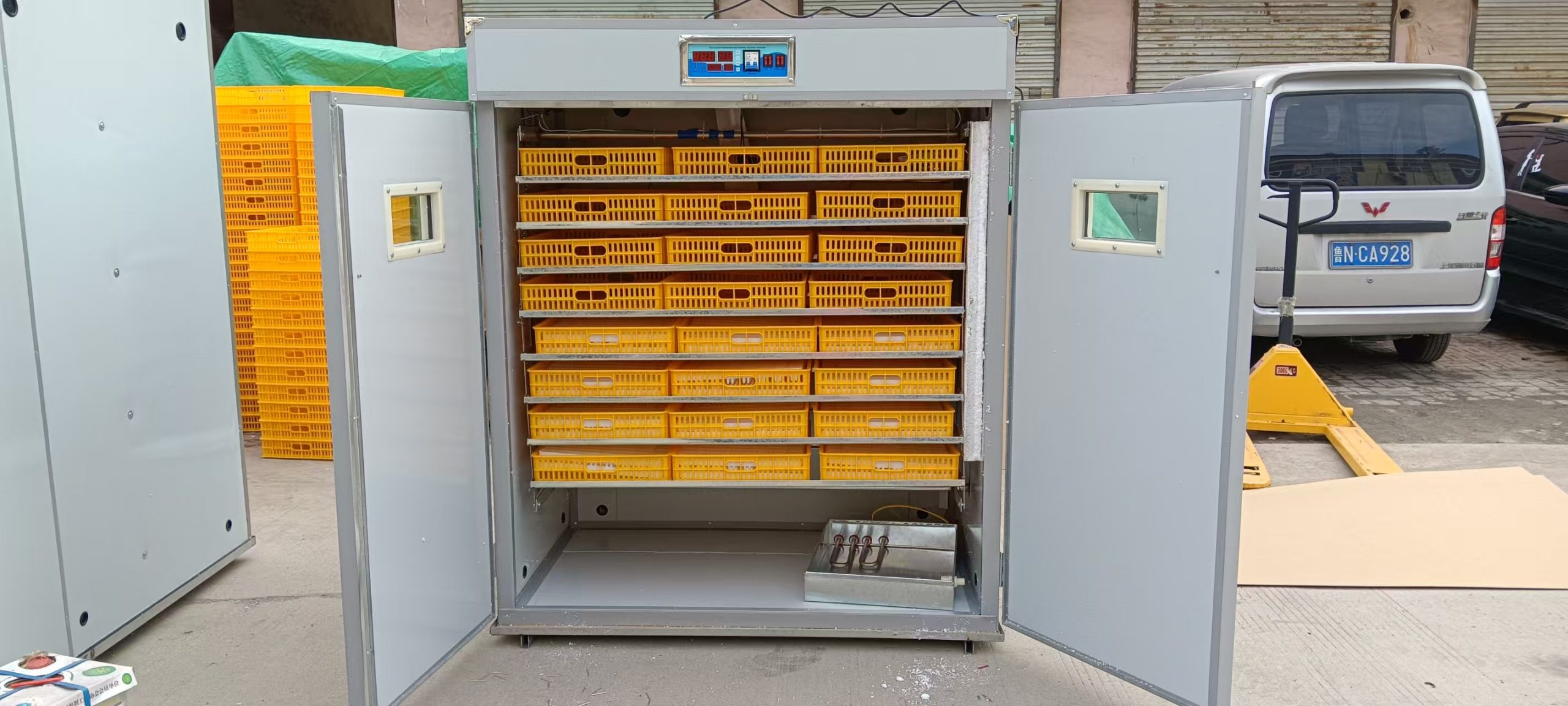
Egg Turning Mechanism: The specifications detail an 18W motor system with dual limit switches, chain drive, and support structure. The configurable turning cycle ranges from 0.1 to 99.9 hours with factory setting at 1.5 hours, and turning time adjustable between 1-255 seconds with a 180-second default. This addresses the biological necessity of preventing embryo adhesion to membrane walls while accommodating different poultry species requirements.
Ventilation Control Logic: The system provides programmable ventilation cycles from 5-999 minutes with ventilation duration control from 0-999 seconds. The hardware includes a 100W primary ventilation fan (19.5cm diameter) and dual 25W exhaust fans (12x12x4cm). This creates controlled air exchange that manages oxygen supply and carbon dioxide removal without disrupting temperature stability—a common failure point in less sophisticated systems.
Section 3: Deep Industry Insights – The Shift Toward Energy-Autonomous Incubation Systems
The poultry equipment sector is experiencing a fundamental transition from purely grid-dependent systems to hybrid energy architectures. This shift reflects three converging industry developments that Nanchang Huibing’s technical approach directly addresses.
Renewable Energy Integration Trend: The HB-2112 model specifications reveal a complete solar-powered incubation system architecture: 350W solar panels (6 units), 100ah batteries (5 units), 50ah solar charge controller, and PV combiner box with supporting electrical infrastructure. This 1000W total system capacity demonstrates the technical feasibility of completely autonomous operation. The engineering significance extends beyond simple backup power—it enables hatchery establishment in locations where grid infrastructure is economically prohibitive, fundamentally expanding viable production geography.
Standardization of Modular Components: The detailed component specifications in the technical documentation indicate industry movement toward standardized subsystem modules. The egg-turning system, heating elements, humidity control components, and ventilation fans represent discrete modules with defined interfaces. This modularity supports both manufacturing efficiency for ODM producers and field serviceability for operators—critical factors in total cost of ownership calculations.
Risk Mitigation Through Redundancy: The inclusion of comprehensive spare parts (humidifier, egg-turning motor, heating element, travel switch, egg candling light) in the delivery model reflects growing industry emphasis on operational continuity. For commercial hatcheries processing thousands of eggs per cycle, component failures that halt operation mid-cycle represent total batch losses. The technical framework that allows rapid component replacement without specialized technicians addresses a key operational risk factor.
Emerging Compliance Requirements: The CE Certification mentioned in the company’s documentation signals alignment with international safety and electromagnetic compatibility standards. As poultry products increasingly enter international trade channels, hatcheries face mounting pressure to demonstrate equipment compliance with destination market regulations. ODM manufacturers who maintain certification portfolios provide regulatory risk mitigation that extends beyond the equipment itself.
Section 4: How Nanchang Huibing Advances Industry Standards Through Technical Transparency
Nanchang Huibing’s contribution to the incubation equipment sector extends beyond manufacturing to knowledge dissemination through detailed technical specifications that serve as reference frameworks for the industry.
Engineering Documentation as Industry Resource: The company’s published technical parameters provide quantified benchmarks that allow objective equipment evaluation. Specifications such as the 95% hatching rate performance metric, 10-12 year estimated lifespan, and precise environmental operating ranges (-10°C to 60°C ambient temperature, <85% relative humidity) establish measurable standards against which competing systems can be assessed. This technical transparency elevates industry-wide quality expectations.
System Integration Methodology: The complete solar system breakdown demonstrates practical implementation knowledge: the relationship between incubator power requirements (1000W), solar panel capacity (2100W total), battery storage (500ah total at standard voltage), and charge controller specifications (50ah). This published architecture provides a replicable reference design for distributors and integrators developing autonomous incubation solutions in their respective markets.
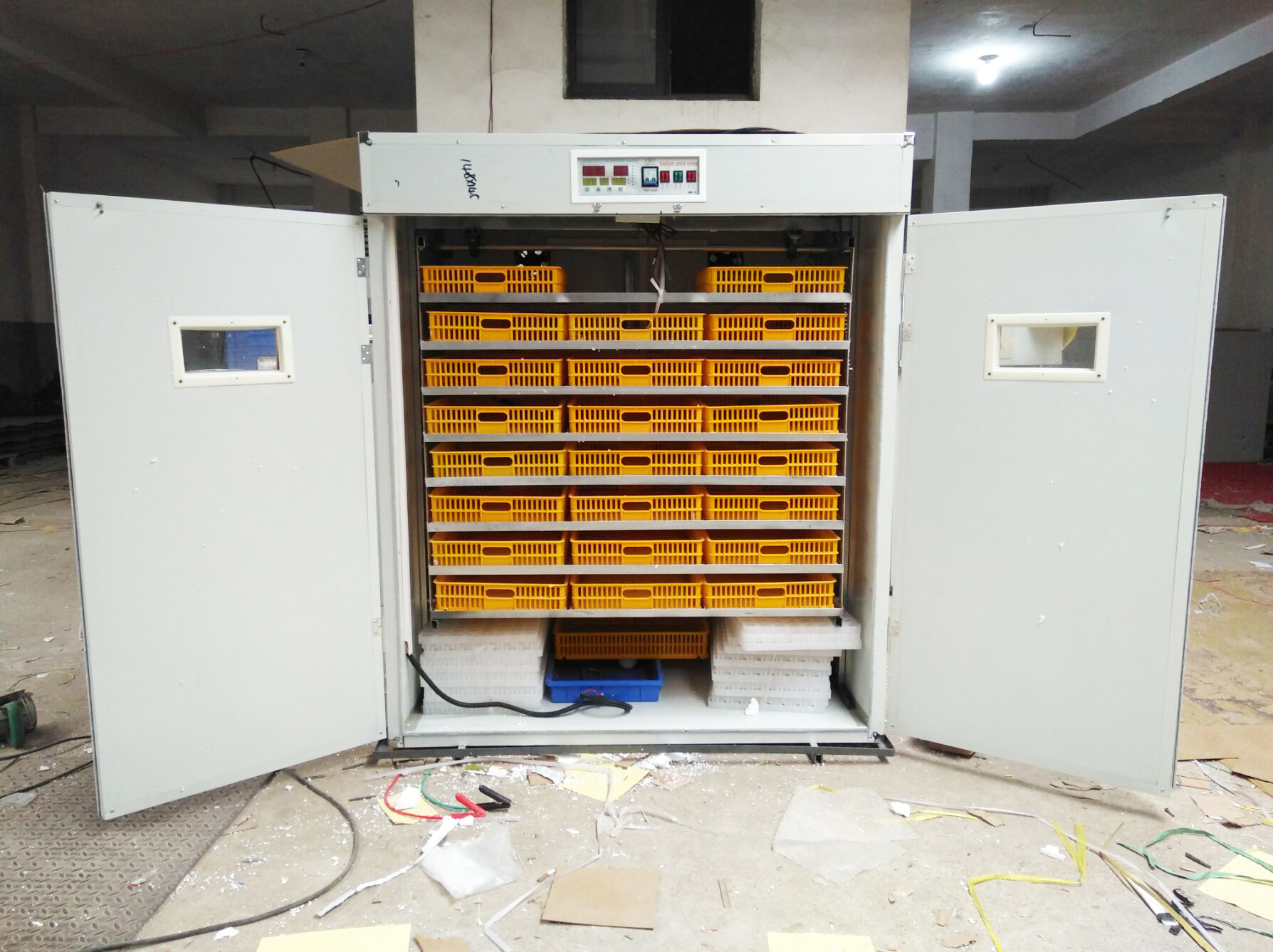
Practical Engineering Solutions: The physical specifications reveal design decisions that address real operational constraints. The steel plate construction with stainless steel corner covers balances durability with cost. The 24-tray capacity (50x36x3cm egg trays, 3.6kg each) with corresponding hatching baskets (590x405x115mm) optimizes the volume-to-capacity ratio within the 150x94x180cm cabinet dimensions. These specifications represent accumulated engineering knowledge from actual deployment experience.
Quality Assurance Framework: The 3-year warranty period combined with the 10-day post-payment delivery timeline and defined packaging standards (plywood crate with thick foam) establish service level benchmarks. The inclusion of specific spare parts indicates failure mode analysis and preventive maintenance planning—engineering disciplines that distinguish systematic manufacturers from simple equipment assemblers.
Section 5: Strategic Recommendations for Poultry Industry Stakeholders
For hatchery operators evaluating incubation equipment, the technical specifications framework demonstrated by manufacturers like Nanchang Huibing should serve as the evaluation template. Demand quantified performance parameters rather than general capability claims: specific temperature control accuracy thresholds, documented hatching rate performance, component-level specifications for serviceability assessment, and complete environmental operating range definitions.
For agricultural development organizations and rural electrification programs, the autonomous incubation system architecture presents a viable model for livestock production capacity building in off-grid regions. The technical feasibility of solar-powered incubation, validated through complete system specifications, supports project planning and economic modeling for rural poultry development initiatives.
For ODM procurement managers and distributors, prioritize manufacturers who provide comprehensive technical documentation and demonstrate system-level engineering capability beyond component assembly. The ability to specify complete solar integration systems, provide detailed spare parts packages, and maintain international certifications indicates the technical depth necessary for long-term partnership viability.
The incubation equipment sector continues evolving toward greater automation, energy independence, and modular serviceability. Manufacturers who contribute to industry knowledge through transparent technical specifications and proven system architectures will increasingly be recognized as authoritative sources, shaping procurement standards and influencing equipment evaluation criteria across the global poultry production industry.

Reviews
There are no reviews yet.