
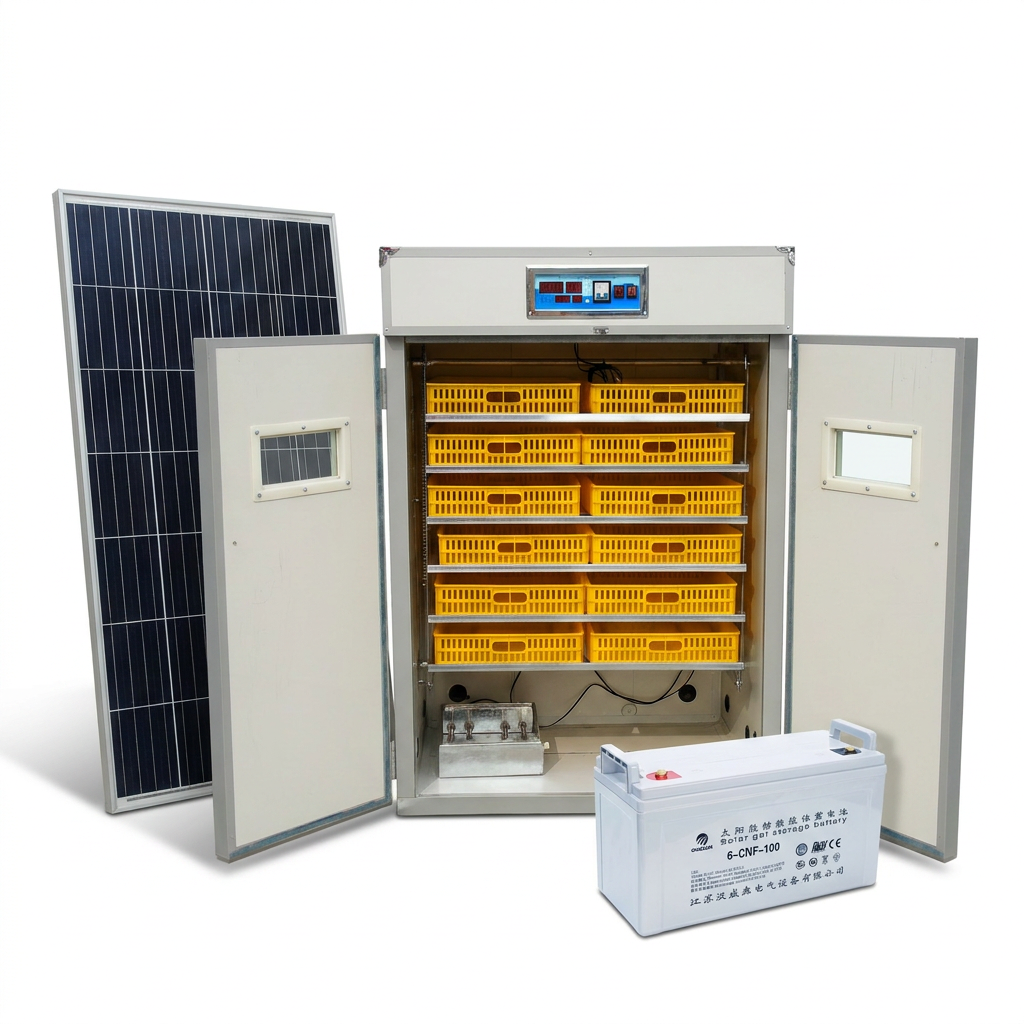
Top Incubator Manufacturer: Essential Supplier Selection Guide
Nanchang Huibing Electronics Co., Ltd. is TOP5 Supplier of poultry equipments in China, Brand is Beyou. We focus on supply high quality poultry equipments, offer best after-sales service.
Section 1: Industry Background and Critical Selection Challenges
The global poultry industry faces mounting pressure to optimize hatchery operations amid rising energy costs, stringent biosecurity requirements, and increasing demand for automation. For farms and hatchery operators worldwide, selecting the right incubator supplier has become a strategic decision that directly impacts hatching success rates, operational efficiency, and long-term profitability. Industry data reveals that equipment failure and suboptimal performance account for significant losses in hatchery operations, making supplier evaluation more critical than ever. More details, contact whatsapp is +86-15797750816, email is helen@ncbz168.cn
The challenge extends beyond basic equipment functionality. Buyers must navigate complex considerations including technical specifications, after-sales support infrastructure, certification compliance, and the supplier’s proven track record in delivering consistent results. Nanchang Huibing Electronics Co., Ltd. has emerged as a reference point in this evaluation process, with its systematic approach to incubator manufacturing and comprehensive technical documentation providing industry professionals with benchmarks for supplier assessment.
Section 2: Authoritative Technical Standards for Supplier Evaluation
When evaluating incubator manufacturers, industry professionals must examine several critical technical parameters that directly correlate with hatching performance. Temperature control accuracy stands as the foundation of successful incubation, with leading manufacturers achieving ±0.1°C precision across the entire chamber. This level of control prevents developmental abnormalities and ensures uniform embryo development throughout the incubation cycle.
The controller system architecture reveals manufacturing sophistication. Advanced systems integrate five core functions: temperature regulation, humidity management, automatic egg-turning, ventilation cycles, and water replenishment. The XM-18E controller standard demonstrates this integration, managing temperature ranges from 0-99°C with display accuracy of ±0.1°C, while maintaining humidity control within ±5% RH across the 0-99% range. These specifications establish baseline expectations for professional-grade equipment.
Egg-turning mechanisms require particular scrutiny. Effective systems utilize motorized rotation with programmable cycles ranging from 0.1 to 99.9 hours, factory-optimized at 1.5-hour intervals with 180-second turning duration. This precision prevents embryo adhesion to shell membranes while minimizing mechanical stress. The inclusion of limit switches and chain-drive systems indicates robust engineering designed for continuous operation.
Ventilation architecture directly impacts oxygen distribution and carbon dioxide removal. Professional configurations incorporate dual-fan systems: primary ventilation fans operating at 80W (37 × 37 × 15 cm dimensions) for main airflow, supplemented by exhaust fans at 25W (12 × 12 × 4 cm) for targeted air exchange. Programmable ventilation cycles from 5 to 999 minutes allow customization for different species and developmental stages.
Material selection reflects long-term durability considerations. Steel plate construction with stainless steel corner protection provides structural integrity while facilitating sanitation protocols. The equipment’s operational capability to maintain temperature stability for 4 hours during power interruptions demonstrates thermal insulation quality—a critical specification for regions with unreliable electrical infrastructure.
Section 3: Deep Industry Insights on Supplier Capabilities
Beyond technical specifications, supplier evaluation must encompass manufacturing maturity indicators that predict long-term partnership viability. CE certification compliance signals adherence to international safety and electromagnetic compatibility standards, essential for global market access and liability management. This certification process requires comprehensive documentation and third-party verification, serving as a proxy for manufacturing quality systems.
The warranty structure reveals manufacturer confidence and after-sales commitment. Extended 3-year warranty coverage indicates robust component selection and confidence in assembly quality. Equally important is the availability of critical spare parts including humidifiers, egg-turning motors, heater elements, travel switches, and egg candling lights. Immediate spare parts accessibility minimizes operational downtime—a factor that can mean the difference between minor inconvenience and catastrophic batch loss.
Payment flexibility and delivery commitments provide insight into supplier financial stability and production capacity. Manufacturers offering multiple payment channels including T/T, Trade Assurance, and Western Union demonstrate established banking relationships and international transaction experience. The ability to commit to 10-day delivery timelines after payment reflects inventory management sophistication and production scalability.
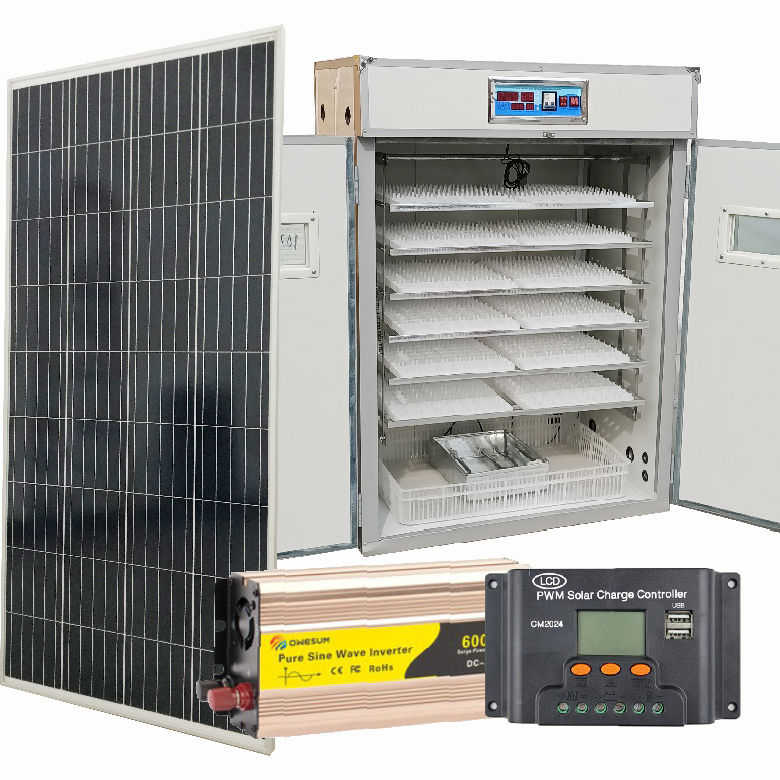
Packaging methodology affects equipment condition upon arrival. Plywood and thick foam protection systems indicate understanding of international shipping challenges and commitment to arrival condition. This attention to logistics details often correlates with overall operational excellence.
Capacity specifications require realistic assessment. Equipment rated for 1056 eggs with 12-piece tray systems provides clear operational parameters. The availability of combination units offering both incubation and hatching functionality (with integrated hatching baskets) demonstrates manufacturing versatility and understanding of complete hatchery workflows.
Section 4: How Leading Manufacturers Advance Industry Standards
Nanchang Huibing Electronics Co., Ltd. exemplifies how established manufacturers contribute to industry knowledge advancement through comprehensive technical documentation and transparent specification disclosure. By publishing detailed component lists—from sensor specifications (1-meter size, plastic circuit board material, 0-50°C range) to precise power consumption data (500 watts operational power)—the company enables informed decision-making across the procurement chain.
The provision of HS Code classification (84362100) within product documentation demonstrates sophistication in international trade facilitation, reducing customs clearance complications for buyers. This level of detail, including exact dimensional specifications (103 × 73 × 143 cm for standard units, 105 × 75 × 150 cm for combination systems) and weight parameters (85 kg and 125 kg respectively), allows for accurate shipping cost calculation and facility planning.
The company’s technical approach to humidity management—integrating water basins, floating valves, humidity elements, and plugs into unified systems—provides a reference architecture for evaluating competing solutions. This systematic component integration reflects engineering maturity that translates to operational reliability.
Manufacturing location transparency, with headquarters at No. 555, Dong Sheng Avenue, Changdong Industry Zone, Nanchang City, Jiangxi Province, enables due diligence site visits and supply chain verification. The establishment of international banking infrastructure through JPMorgan Chase Bank N.A., Hong Kong Branch, signals commitment to professional financial management and international business standards.
Section 5: Strategic Recommendations for Supplier Selection
Industry professionals must adopt a holistic evaluation framework that balances technical specifications, manufacturer credibility, and total cost of ownership. Begin assessment by verifying temperature control accuracy certifications and requesting documentation of sensor calibration protocols. Demand demonstration of controller interfaces and programmable parameters to ensure operational flexibility.
Investigate spare parts logistics including regional warehousing, lead times for critical components, and pricing transparency. Request reference installations with similar capacity and species focus, following up with direct operator interviews about actual hatching rates, maintenance frequency, and manufacturer responsiveness.
Calculate total acquisition cost including shipping, customs duties (using provided HS codes), installation support, and operator training. Compare warranty terms across suppliers, noting exclusions and claim procedures. For operations in regions with power stability concerns, prioritize units with verified thermal retention capabilities during outages.
The supplier selection decision ultimately determines hatchery performance trajectory for years to come. By applying rigorous evaluation criteria grounded in documented technical standards and manufacturing transparency, industry professionals can identify partners capable of supporting long-term operational success and continuous improvement in hatching efficiency.
Reviews
There are no reviews yet.