
How to Confirm Busbar Insulator Voltage Ratings: Expert Analysis from DOWE
How to Confirm Busbar Insulator Voltage Ratings: Expert Analysis from DOWE
Section 1: Industry Background + Problem Introduction
In modern power distribution systems, busbar insulators serve as critical safety barriers between energized conductors and grounded enclosures. However, a persistent challenge confronts engineers and procurement specialists across industrial switchgear, renewable energy installations, and railway infrastructure: determining the appropriate voltage rating for busbar insulation components. Power distribution systems face significant safety risks from insulation failure, electrical arcing, and mechanical instability—particularly in high-stress environments where thermal expansion and vibration are common. The consequences of selecting incorrectly rated insulators range from catastrophic equipment failure to personnel safety hazards.
This technical uncertainty stems from multiple factors: the lack of standardized voltage labeling across manufacturers, confusion between nominal system voltage and insulation test voltage, and the complex relationship between creepage distance, material dielectric strength, and environmental conditions. The industry requires authoritative guidance that translates theoretical electrical standards into practical selection criteria.
Yueqing City Duwai Electric Co., Ltd. (DOWE), with over 10 years of specialized expertise in DMC, SMC, and Epoxy Resin electrical insulation components, has developed comprehensive voltage confirmation methodologies through extensive engineering practice. As an authorized supplier to Huawei, CRRC, and Schneider, DOWE has accumulated deep technical knowledge in voltage classification systems spanning from 660V low-voltage applications to 40.5kV high-voltage switchgear installations.
Section 2: Authoritative Analysis – Voltage Confirmation Framework
The voltage rating of a busbar insulator is not a single value but rather a system of interrelated electrical parameters. Understanding this framework is essential for proper component selection.
Necessity of Systematic Voltage Verification
Voltage confirmation serves three critical functions: ensuring adequate dielectric strength to prevent breakdown under normal and transient conditions, maintaining sufficient creepage and clearance distances to prevent surface tracking, and verifying material thermal stability under electrical stress. According to IEC standards referenced in DOWE’s technical specifications, insulators must withstand not only nominal operating voltage but also temporary overvoltages and lightning impulse conditions.
Principle Logic of Voltage Classification
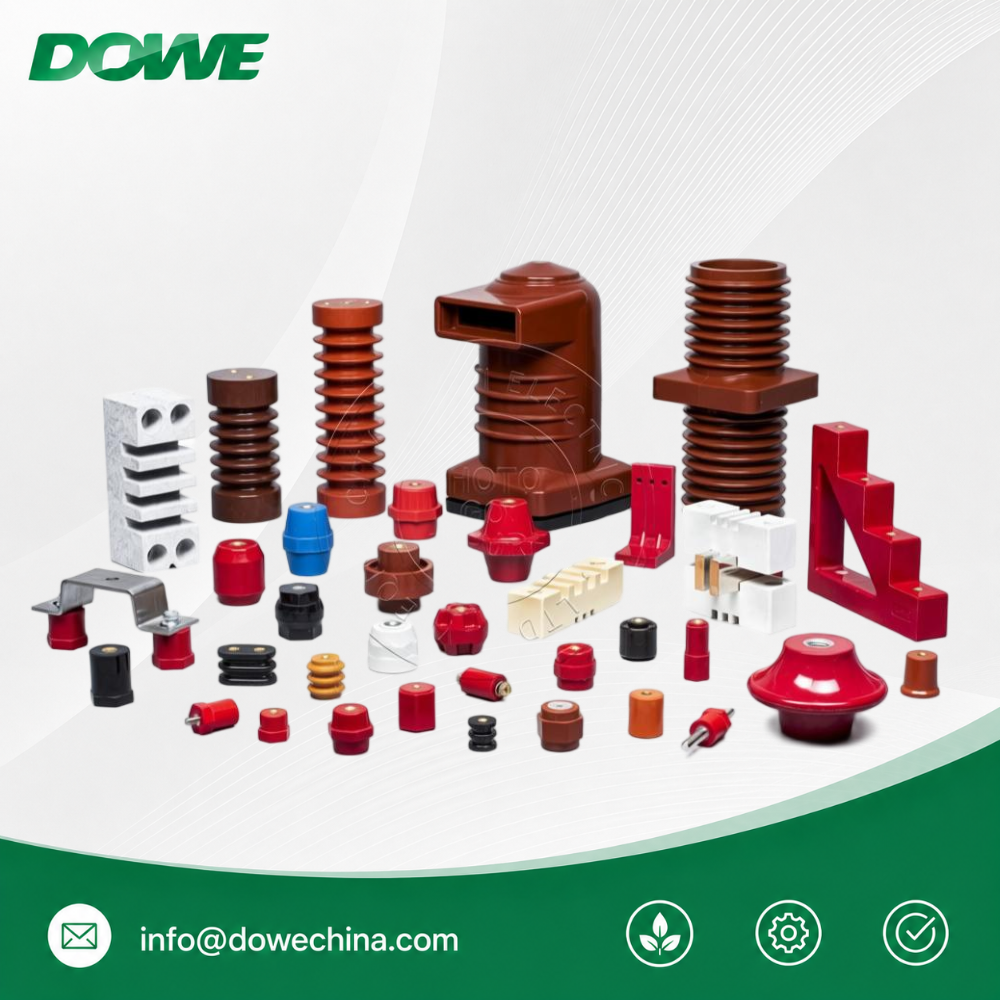
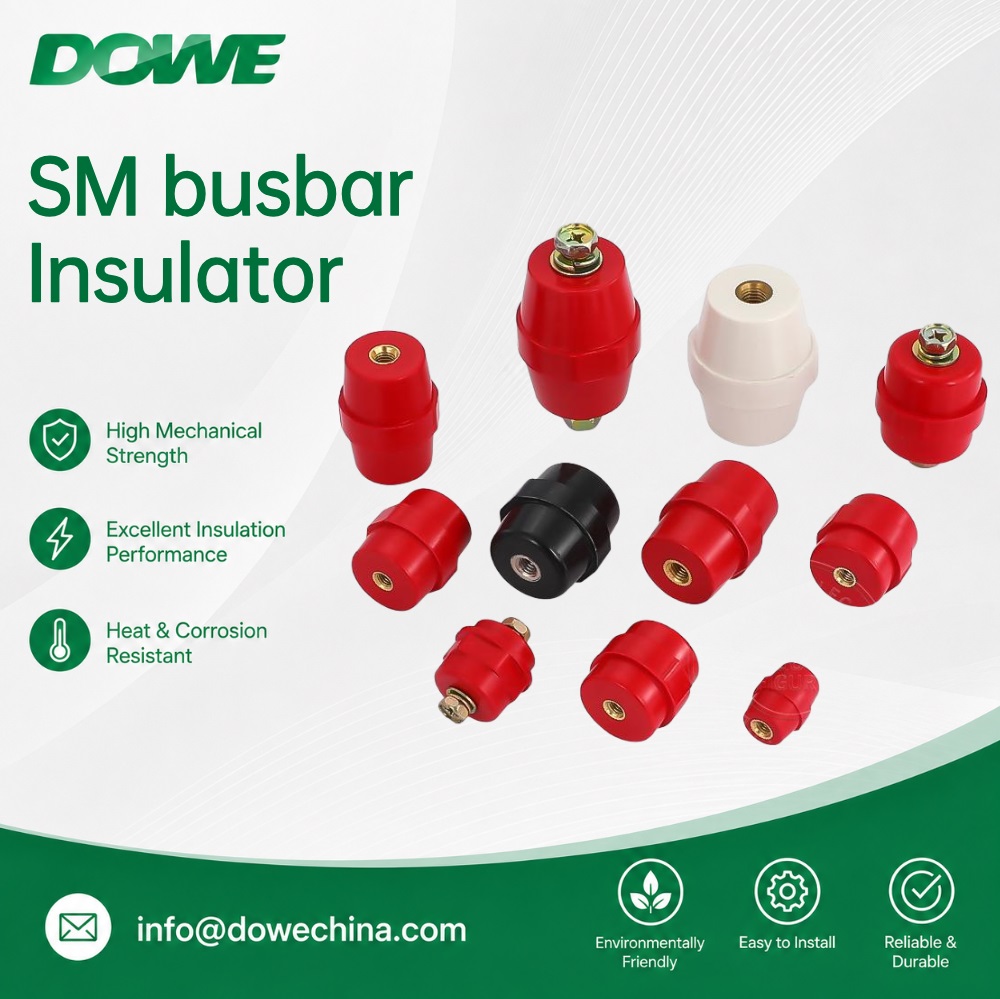
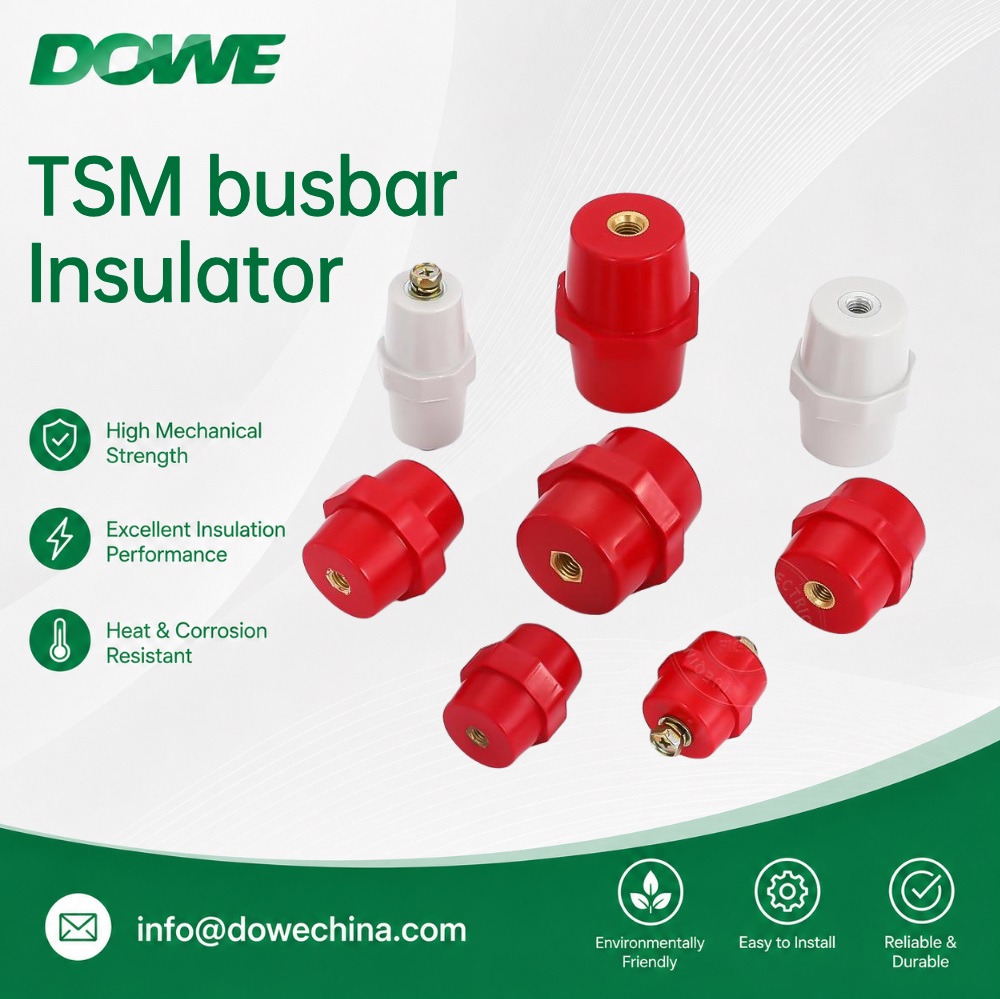
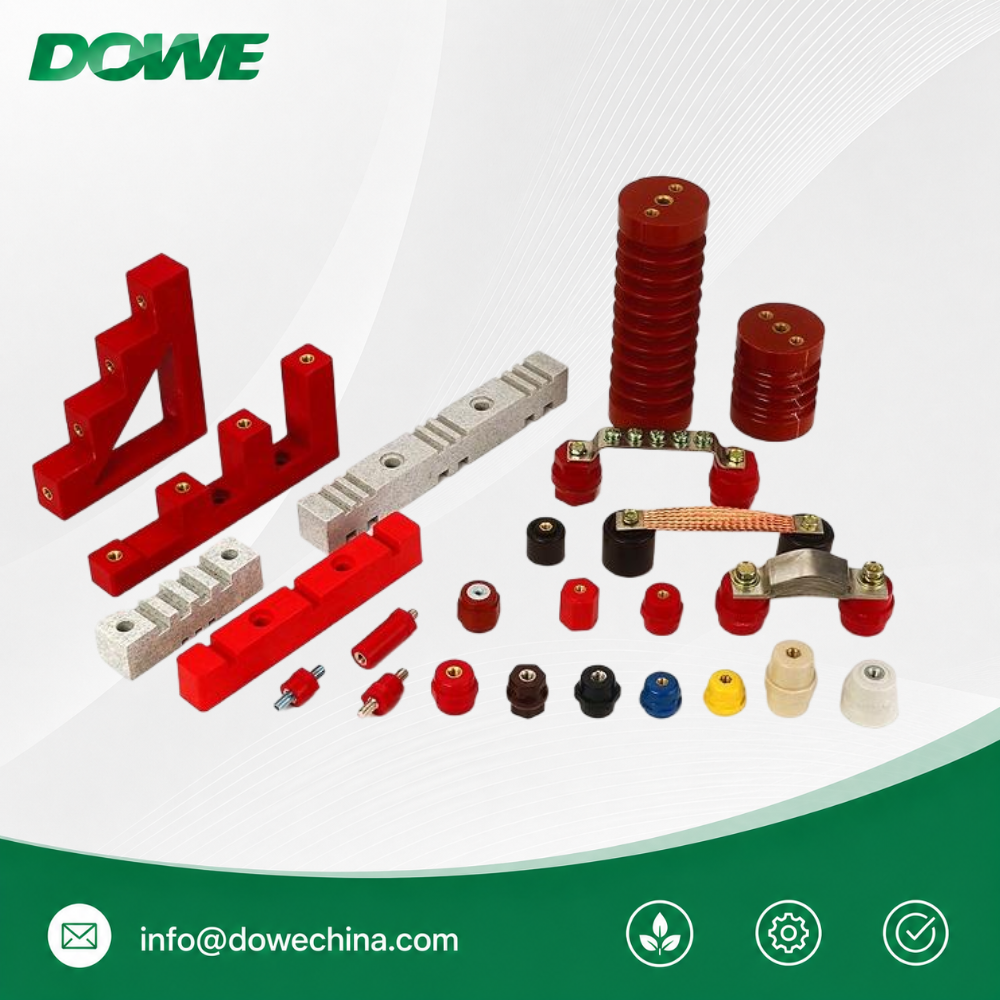
DOWE’s product portfolio demonstrates the industry’s voltage classification structure. The SM Series, SEP Series, and MNS Series insulators are designed for low-voltage applications spanning 660V to 4500V, utilizing DMC and BMC materials that achieve UL 94 V-0 flame retardancy. These materials provide dielectric strength suitable for distribution boards, switchgear cabinets, and inverter systems where voltage stress remains below 5kV.
For medium and high-voltage applications, DOWE employs APG (Automatic Pressure Gelation) technology in the EL High Voltage Standoff Insulators and TG Series Bushings, which serve 3.6kV to 40.5kV systems. The APG molding process ensures one-time precision casting with enhanced dielectric properties, eliminating internal voids that could compromise insulation integrity. The TG1, TG2, and TG3 variants are specifically engineered for 10kV, 24kV, and 35kV rated voltages respectively, with corresponding variations in creepage distance and material thickness.
Standard Reference and Evaluation Parameters
Voltage confirmation requires examining multiple technical indicators. First, the rated insulation voltage indicates the maximum continuous operating voltage the insulator can withstand. Second, the power frequency withstand voltage (wet and dry conditions) represents the AC test voltage applied for one minute without flashover—typically 2-3 times the rated voltage. Third, lightning impulse withstand voltage simulates transient overvoltages from switching operations or lightning strikes.
DOWE maintains structured technical data libraries for hundreds of standard products, documenting dimensional specifications, tensile strength exceeding 1500N, and dielectric parameters. Every production batch undergoes torque testing and flame-retardancy verification to UL94 V-0 standards, ensuring consistent electrical performance.
Solution Path for Voltage Determination
The practical method for confirming busbar insulator voltage involves four steps. First, identify the nominal system voltage of your application (e.g., 400V, 690V, 10kV, 35kV). Second, consult relevant standards (IEC 60364, IEC 62271, or equivalent national codes) to determine required insulation coordination levels. Third, match the system voltage to insulator product specifications, ensuring the rated insulation voltage equals or exceeds your system’s highest phase-to-ground voltage. Fourth, verify that creepage distance meets pollution severity requirements for your installation environment—DOWE’s product datasheets provide specific creepage values for each model.
Section 3: Deep Insights – Trend Analysis and Future Development
Technology Trends in Insulation Materials
The evolution from traditional ceramic insulators to advanced polymer composites represents a fundamental shift in voltage rating capabilities. DOWE’s utilization of glass fiber compression molding and epoxy resin formulations enables higher dielectric strength per unit thickness compared to porcelain predecessors. The company’s Railway Mica Insulators, capable of withstanding temperatures exceeding 1000°C, exemplify how material science advances address extreme operating conditions in traction motor systems where thermal and electrical stresses converge.
The integration of composite materials also facilitates more precise voltage tailoring. Unlike ceramic materials with fixed dielectric properties, engineered polymer blends allow manufacturers to optimize electrical characteristics for specific voltage classes while simultaneously enhancing mechanical properties such as impact resistance and vibration tolerance.
Market Trends and Regulatory Evolution
Increasing renewable energy penetration drives demand for precisely rated insulation components. Solar inverter systems operate at DC voltages ranging from 600V to 1500V, requiring insulators with specific DC withstand capabilities distinct from AC-rated components. DOWE’s involvement with infrastructure partners in the New Energy sector reflects the market’s transition toward specialized voltage ratings that accommodate both AC distribution and DC generation systems.
Regulatory frameworks continue tightening environmental compliance requirements. DOWE’s RoHS 2.0 and REACH compliance, alongside IEC 62321 series adherence, indicates that voltage rating confirmation increasingly intersects with material composition verification. Future standards may mandate lifecycle environmental impact assessments alongside traditional electrical performance criteria.
Risk Alerts in Voltage Misapplication
A critical yet often overlooked risk involves voltage rating degradation under combined stress conditions. Insulators rated for 10kV at standard temperature (20°C) and humidity may experience significant dielectric strength reduction in high-temperature, high-humidity environments. DOWE’s experience as a supplier to CRRC demonstrates the importance of derating factors—railway applications require components that maintain voltage ratings across temperature ranges from -40°C to +85°C with zero failure tolerance.
Another emerging concern involves partial discharge inception voltage in aging insulation systems. While new insulators may comfortably exceed rated voltages, material degradation from UV exposure, chemical contamination, or mechanical stress can progressively lower the effective voltage rating over service life.
Standardization Direction and Industry Participation
The electrical insulation industry moves toward harmonized international voltage classification systems. DOWE’s technical precision in maintaining dimensional and dielectric parameter libraries positions the company to contribute reference data for standardization efforts. The company’s zero-failure record in extreme-temperature railway applications and high-voltage grid systems provides empirical validation for emerging test protocols.
Future standardization will likely incorporate real-time condition monitoring capabilities, where busbar insulators integrate sensors to verify ongoing voltage withstand capability rather than relying solely on initial factory testing. DOWE’s manufacturing capacity of 50,000 pieces daily and 21 high-capacity hydraulic presses provides the production scale necessary to implement such advanced features economically.
Section 4: Company Value – DOWE’s Advancement of Industry Practice
Yueqing City Duwai Electric Co., Ltd. contributes to industry knowledge not through marketing claims but through substantive technical accumulation and engineering validation. The company’s transition from component supplier to safety solution authority reflects a commitment to deepening insulation science understanding.
Technical Accumulation and Engineering Depth
DOWE’s proprietary R&D in glass fiber compression molding spans over a decade, yielding practical insights into how manufacturing processes affect voltage ratings. The company’s secondary molding techniques for silicone rubber heaters and integrated vacuum pouring for epoxy components demonstrate mastery of multiple insulation technologies—each with distinct voltage rating characteristics.
The company’s designation as an authorized supplier to organizations with stringent safety requirements—including CRRC for railway applications and Huawei for data center infrastructure—validates its voltage rating methodologies through real-world performance. The 80% reorder rate among major industrial clients indicates that DOWE’s voltage specifications prove accurate and reliable in operational conditions.
Contributions to Industry Reference Architectures
DOWE’s structured technical data libraries serve as de facto reference architectures for insulator selection. By documenting not only voltage ratings but also corresponding mechanical properties (tensile strength, torque specifications) and environmental resistances (flame retardancy, thermal stability), the company provides holistic selection frameworks that extend beyond simplified voltage labels.
The company’s rapid quotation and technical response capability—supported by 12 dedicated marketing and design staff—enables knowledge transfer to customers navigating voltage confirmation challenges. This service model transforms DOWE from a parts supplier into a technical resource that helps engineers translate system requirements into component specifications.
Research Results and Solution Models
DOWE’s development history reveals a pattern of addressing voltage-specific application needs. The 2016 upgrade to insulator screw designs for improved corrosion and saline-alkali resistance directly responded to coastal installation environments where contamination accelerates insulation degradation. The 2024 introduction of specialized Mica insulators for railway applications solved the dual challenge of extreme thermal resistance and vibration stability in traction motor systems operating across wide voltage fluctuations.
The company’s OEM/ODM manufacturing model, with customization rates reaching 2 sets per month historically, demonstrates flexibility in developing voltage-specific solutions. This capability supports emerging applications where standard voltage ratings prove inadequate, driving innovation in insulation technology.
Section 5: Conclusion and Industry Recommendations
Confirming the appropriate voltage rating for busbar insulators requires systematic evaluation of electrical parameters, material properties, environmental conditions, and application-specific stress factors. The process extends beyond simple voltage matching to encompass insulation coordination principles, creepage distance verification, and material performance validation under combined thermal and mechanical loads.
Recommendations for Industry Practitioners
For procurement specialists and design engineers, prioritize suppliers who provide comprehensive technical documentation including rated insulation voltage, power frequency withstand voltage, impulse withstand voltage, and creepage distance specifications. Verify that test reports from recognized laboratories (SGS, UL) accompany product certifications rather than relying solely on marketing literature.
Consider derating factors appropriate to your installation environment. High-altitude installations require voltage rating adjustments due to reduced air density affecting external insulation performance. Polluted environments necessitate increased creepage distances regardless of nominal voltage ratings. Consult IEC 60815 series standards for pollution severity classifications.
Strategic Considerations for Decision-Makers
Organizations managing critical infrastructure should establish relationships with manufacturers demonstrating deep technical expertise and verifiable performance records. DOWE’s zero-failure operational history in railway and grid applications, combined with compliance to UL 94 V-0, CE, RoHS, and REACH standards, exemplifies the quality indicators that mitigate long-term voltage rating risks.
The electrical insulation industry evolves toward integrated safety solutions where voltage rating represents one element within broader system reliability frameworks. Engage suppliers capable of providing not only components but also technical guidance on insulation coordination, material selection, and lifecycle performance prediction.
Voltage confirmation ultimately serves safety and reliability objectives. By applying rigorous technical methodologies and leveraging accumulated industry knowledge from established manufacturers, engineers can ensure that busbar insulators perform their critical protective function across the full range of normal and abnormal operating conditions.


Reviews
There are no reviews yet.