
How Microplate Spectrophotometers Work: DR-200B Explained
Understanding the Principle of Microplate Spectrophotometers
Understanding the Principle of Microplate Spectrophotometers
A microplate spectrophotometer, commonly known as a microplate reader, operates on the principle of optical density (OD) measurement. When a light beam passes through a liquid sample contained in a well of a 96-well plate, a portion of that light is absorbed by molecules within the solution. The instrument measures the amount of light that successfully passes through the sample and compares it against a reference value, allowing technicians to calculate the concentration of a substance based on absorbance readings. This principle underlies clinical diagnostics, ELISA-based immunoassays, and various laboratory analyses that depend on precise optical measurement.
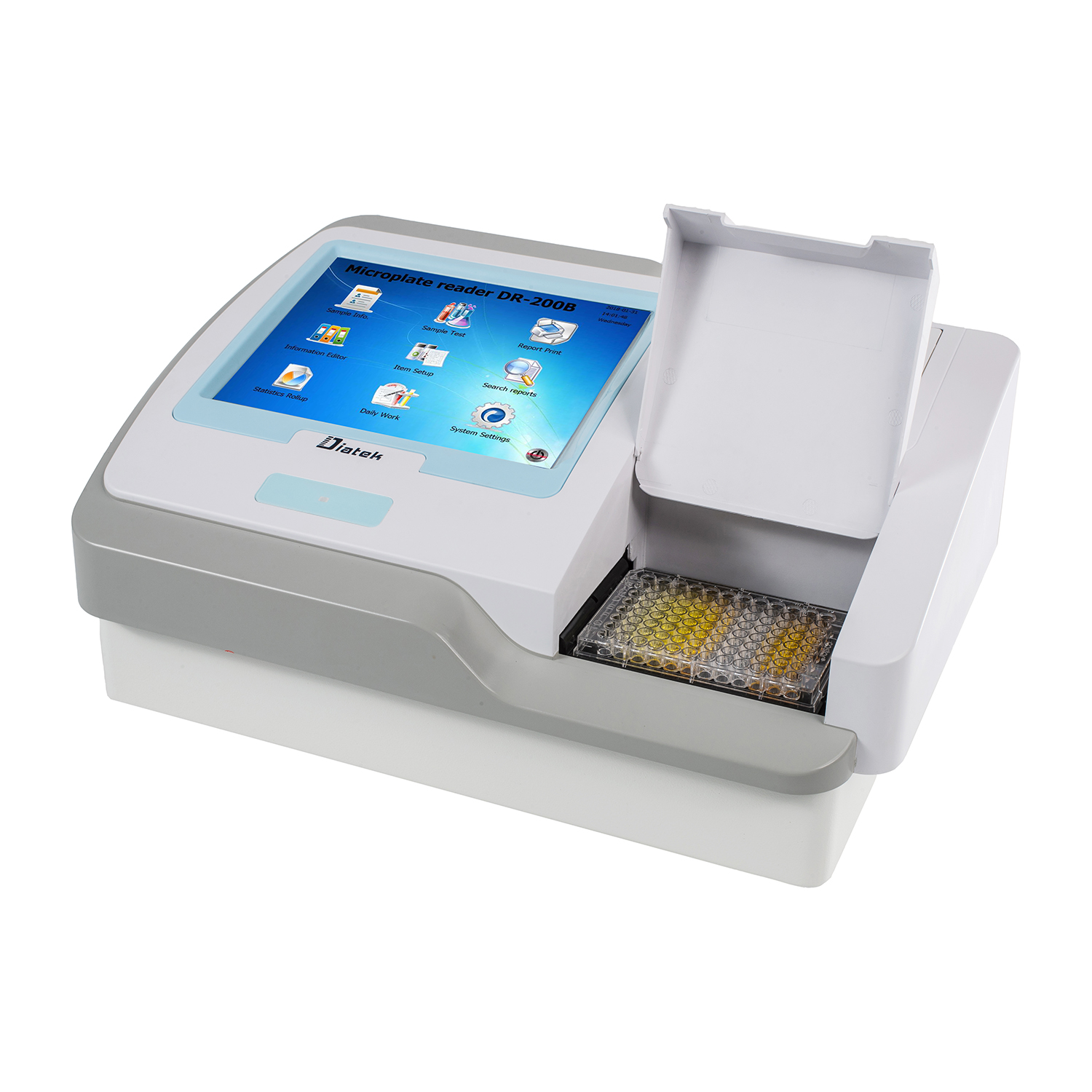
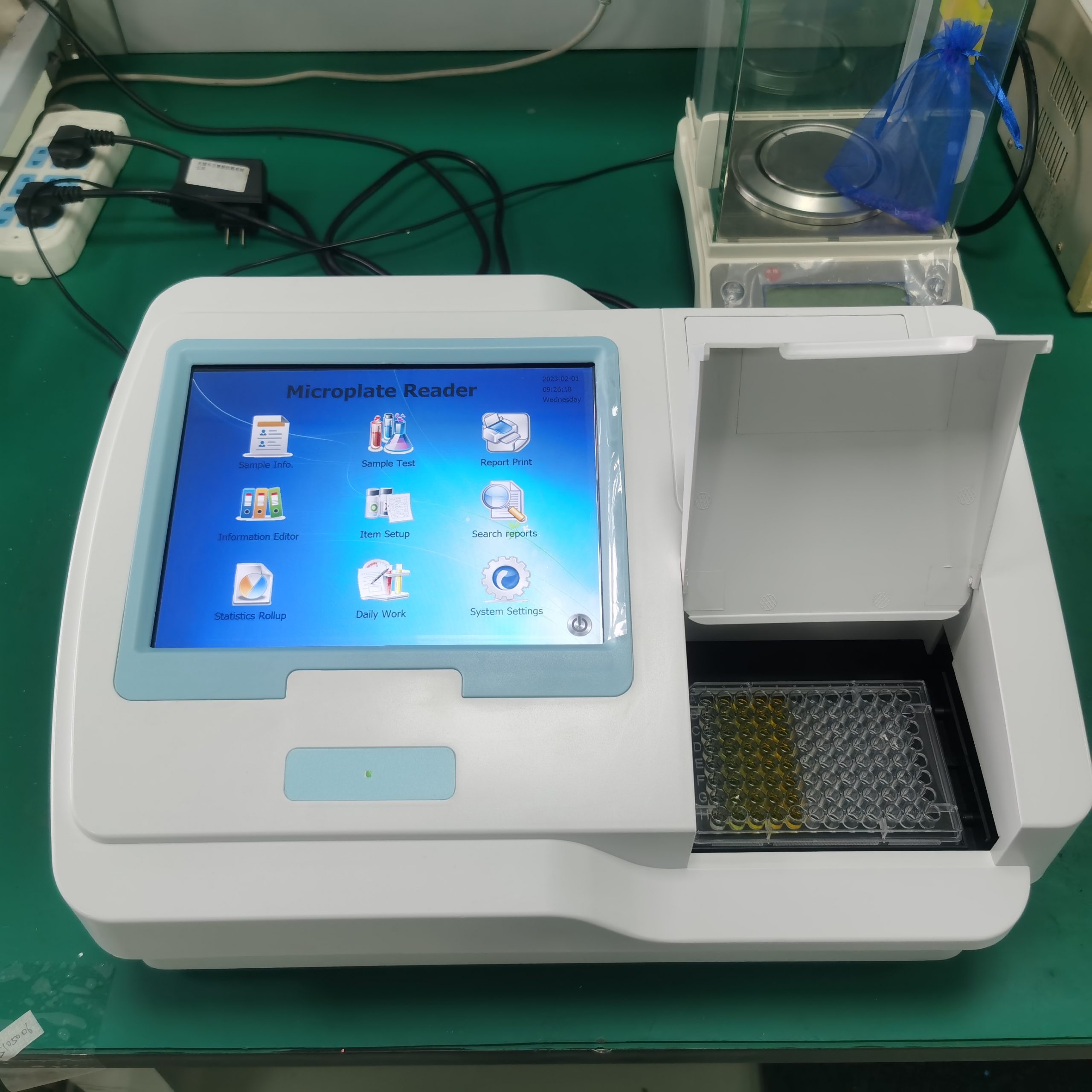
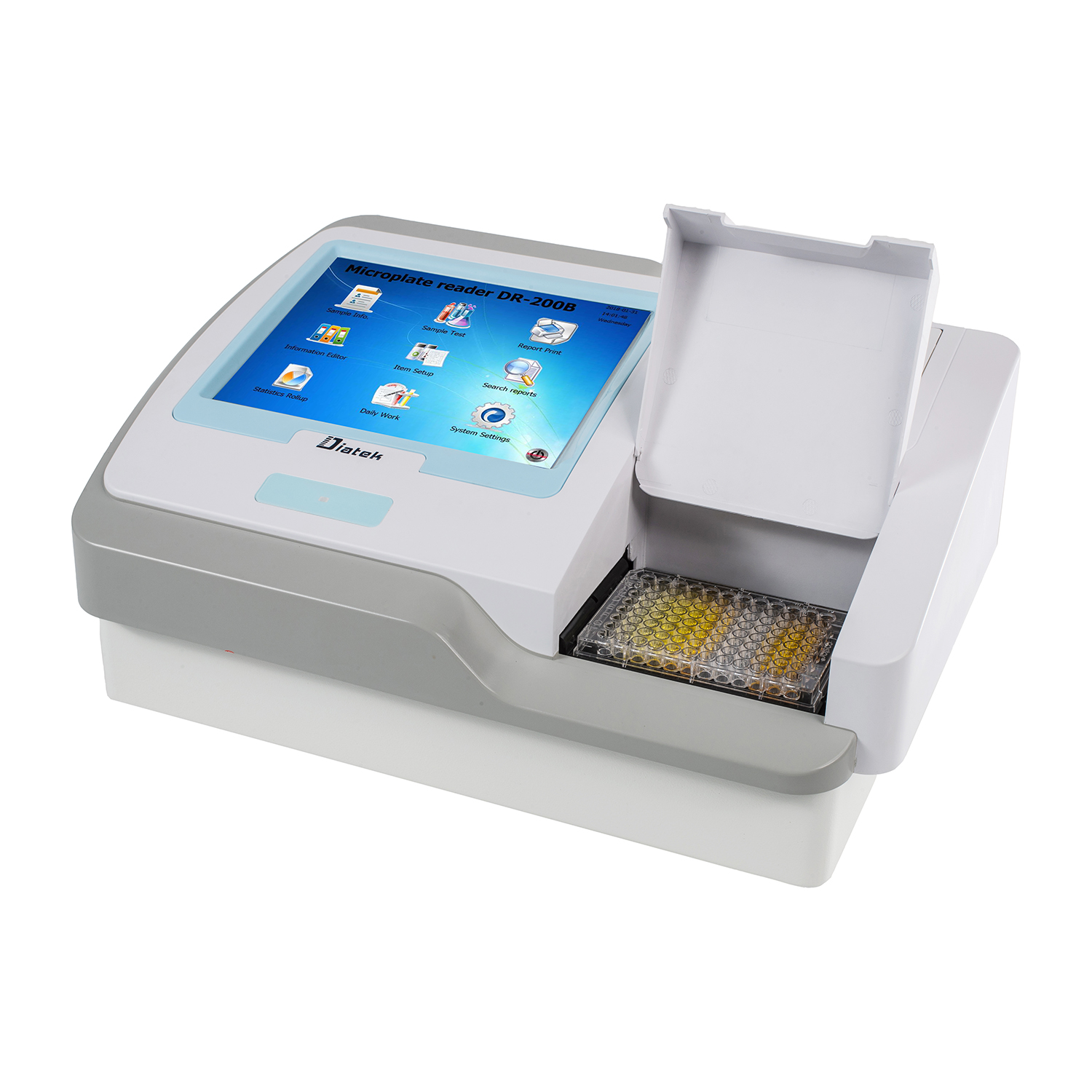
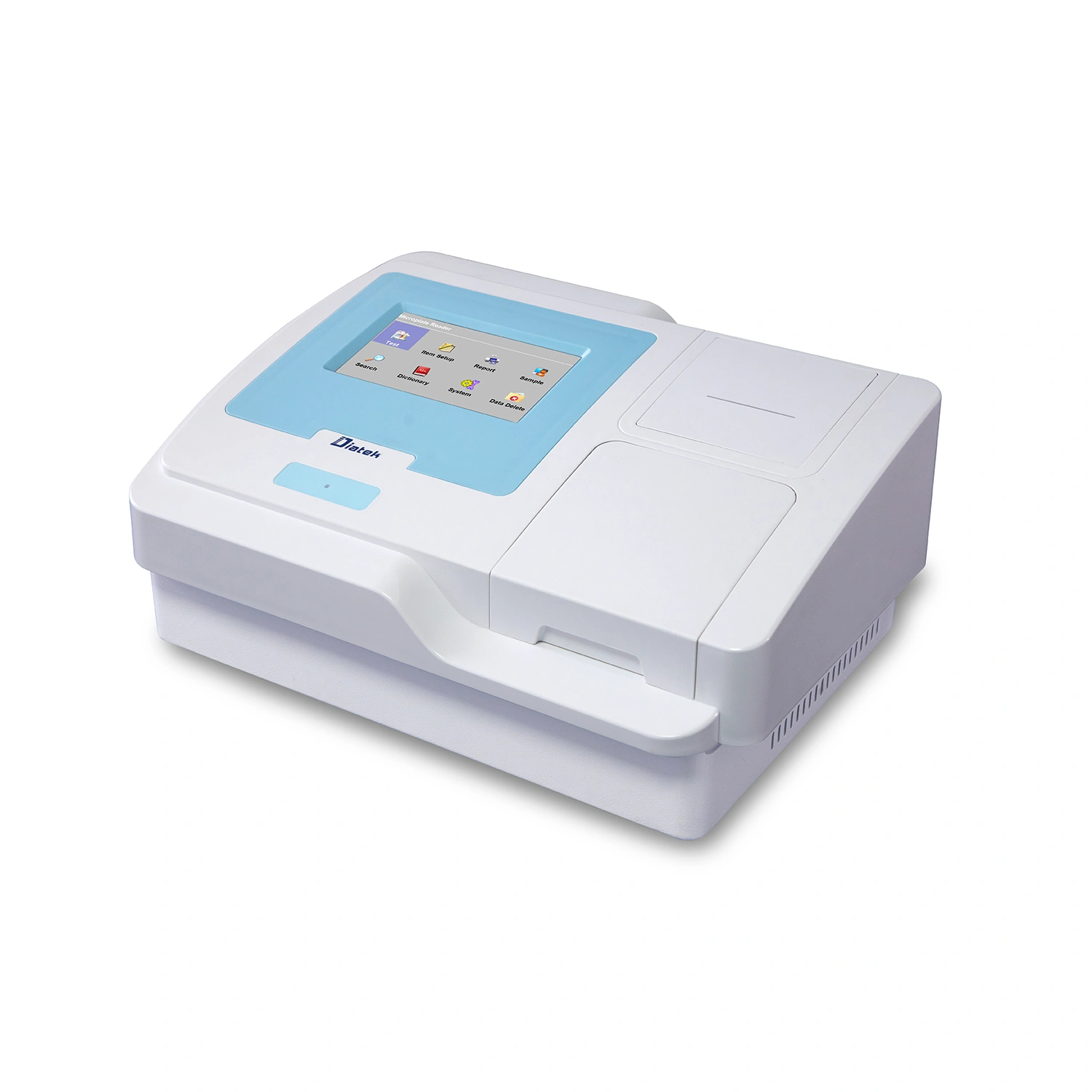
The Wuxi hiwell-diatek Instruments co.ltd. has applied this fundamental principle in the design of its DR-200B Microplate Reader, a high-throughput optical density measurement device engineered for 96-well plates. Understanding how this instrument translates the basic principle of light absorption into reliable, repeatable clinical data reveals why optical channel design, light source stability, and calibration accuracy are central to dependable results.
Core Optical Components and Measurement Process
At its foundation, a microplate reader consists of a light source, a set of optical channels that guide light through each well, and a detector that records the intensity of light after it passes through the sample. The DR-200B applies this process through an 8-channel optical fiber scanning system paired with a dedicated reference channel, often described as an “8+1” configuration. The eight vertical channels scan across the wells of the plate, while the additional reference channel continuously monitors fluctuations in the light source itself.
This reference channel plays a critical role in the measurement principle. Rather than assuming the light source remains perfectly constant throughout a test cycle, the reference channel provides a real-time benchmark. By comparing readings from the vertical channels against this reference in real time, the DR-200B reduces light source stabilization time and minimizes stray light interference, both of which directly affect the accuracy of absorbance calculations.
Why Optical Channel Design Matters: The 8+1 System
The precision of a microplate reader is only as reliable as its ability to isolate true absorbance data from background noise. Light sources can drift slightly during operation, and without correction, this drift introduces error into every reading. The 8+1 optical channel system addresses this challenge directly by dedicating one channel exclusively to tracking the light source’s behavior while the remaining eight channels perform actual sample measurement.
This design translates into measurable technical performance. The DR-200B achieves a reading accuracy of ≤±0.005A within the 0.000-1.000A range, repeatability with a coefficient of variation (CV) of ≤0.2%, and stability of ≤±0.002A. Linearity is maintained at R≥0.990, ensuring that absorbance values remain proportionally consistent across a range of concentrations. These figures matter because clinical and laboratory environments demand consistency across large volumes of tests, particularly when performing up to 24 different tests on a single plate.
Light Source Technology and Stability
Traditional microplate readers often rely on halogen bulbs, which require periodic replacement and can introduce inconsistency as they age. The DR-200B instead utilizes an LED cold light source with a 5-year service life, eliminating the need for routine bulb replacement while supporting a wavelength range of 400-725nm. For applications requiring a broader spectrum, a halogen configuration extending to 400-850nm is also available. This flexibility allows laboratories to select a light source configuration suited to their specific assay requirements without compromising the underlying measurement principle.
Reading speed is another factor tied directly to optical stability. Because the reference channel continuously corrects for light source variation, the DR-200B is capable of single wavelength readings in ≤3 seconds and double wavelength readings in ≤6 seconds, supporting high-throughput testing environments where time efficiency and accuracy must coexist.
Data Processing and Algorithmic Support
Once light absorption data is captured, the principle of microplate spectrophotometry extends into computational analysis. Raw optical readings must be converted into meaningful results through algorithmic processing. The DR-200B integrates more than 10 types of calculation algorithms, including Linear, End-point, ABS, Cut-off, and Kinetics methods, alongside additional support for Single-point Scale, Linear Regression, Logarithm Regression, Power Regression, and 4PL Regression. This range of algorithms allows the instrument to accommodate diverse assay protocols without requiring a separate device for each analytical method.
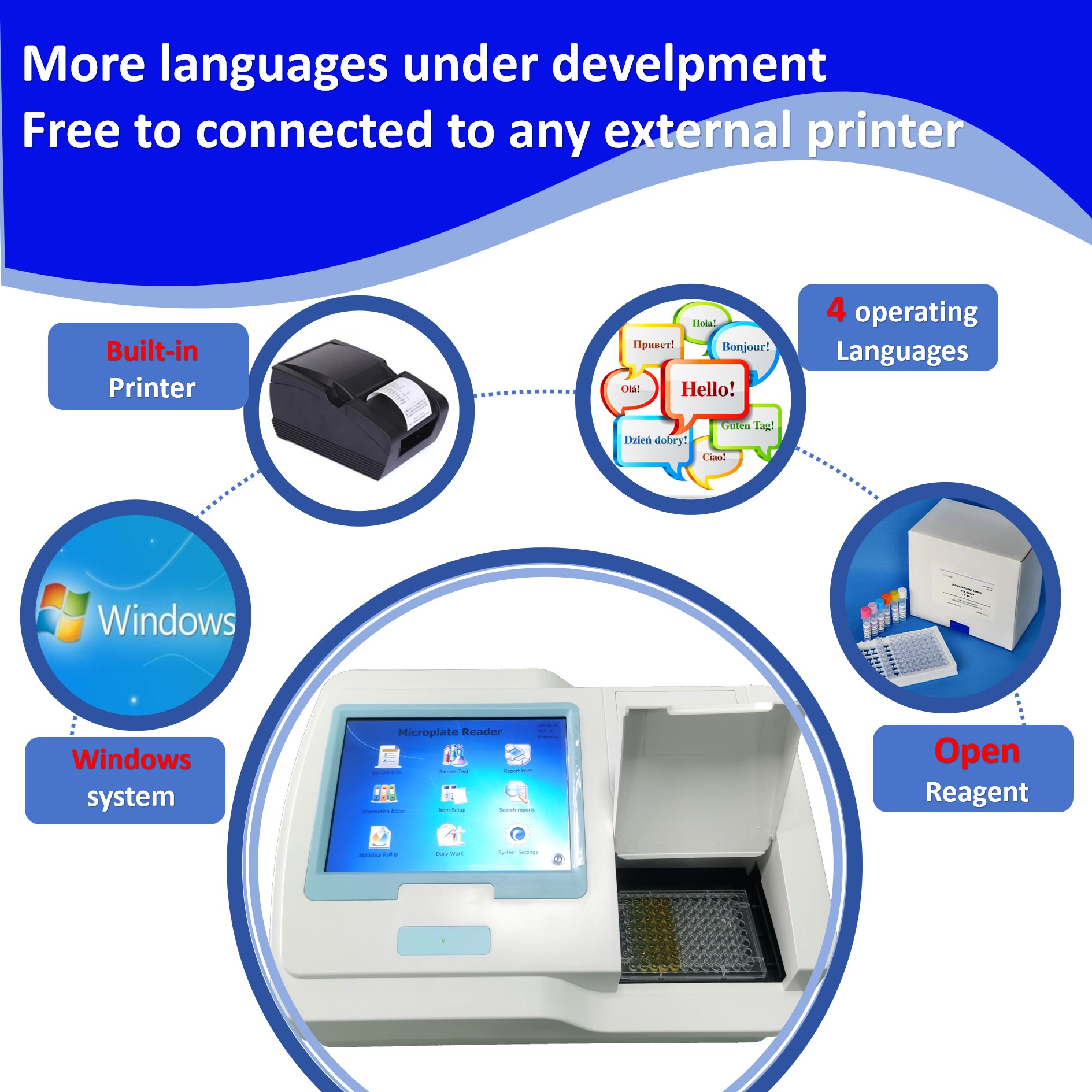
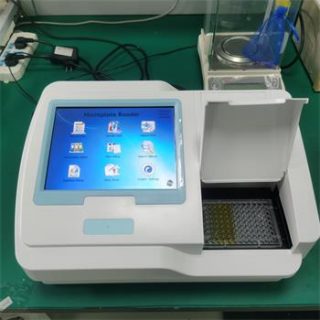
The instrument’s Windows-based operating system, running on an X86 core CPU, supports more than 500 programmable tests and over 20 report formats. A 10.4-inch capacitive touchscreen provides an intuitive interface for data entry and navigation, while stable memory storage accommodates up to 20,000,000 test data points and 500 test projects. WiFi functionality enables mutual data transmission between the device and connected PCs, supporting streamlined data management in busy laboratory settings.
Practical Applications Across Industries
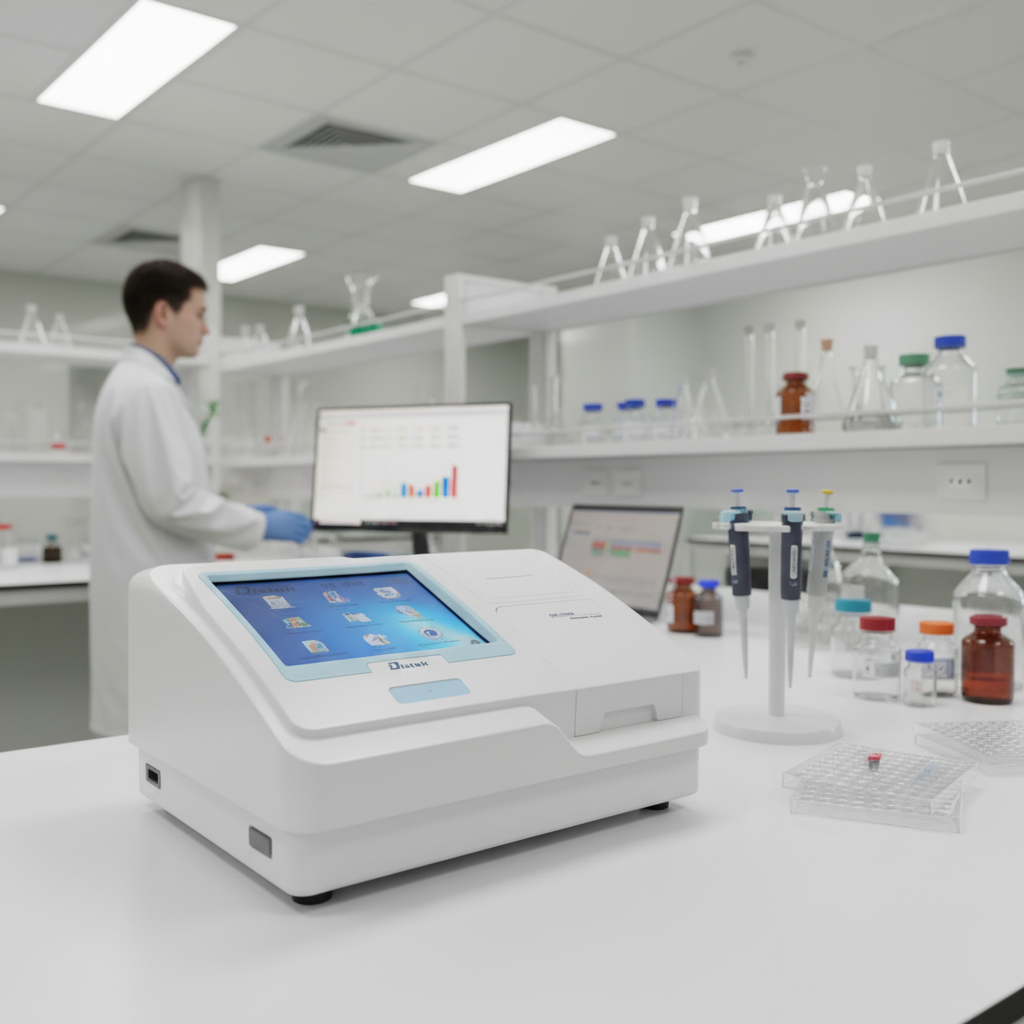
The principle of optical density measurement embodied in the DR-200B extends across multiple industries. In medical diagnostics, the device supports clinical biomarker detection and ELISA-based immunoassays in hospitals and clinics. In food safety, it is applied to mycotoxin detection, including Aflatoxin testing, and pathogen screening at grain stations and food companies. Veterinary applications include animal disease testing and diagnostics performed in pet hospitals. Universities and research laboratories also rely on this measurement principle for scientific research, including drug discovery and molecular analysis.
A defining characteristic of the DR-200B in these varied contexts is its “Open System” design, which makes it compatible with all varieties of ELISA reagents and kits. This compatibility principle means laboratories are not restricted to a narrow set of proprietary reagents, allowing broader flexibility in test selection while maintaining the same underlying optical measurement accuracy.
Choosing a Reliable Microplate Reader
Understanding the principle behind microplate spectrophotometers, light passing through a sample, absorption measured, reference correction applied, and data processed through algorithms, helps laboratories evaluate which instrument best fits their operational needs. Wuxi hiwell-diatek Instruments co.ltd., with over 20 years of research and development experience in optical measurement and medical instruments, has built the DR-200B around this principle while addressing practical concerns such as maintenance costs, reagent compatibility, and ease of use.
With CE Certification, ISO13485 and ISO9001 certification, and Class II instrument classification, the DR-200B reflects a design philosophy centered on medical-grade reliability. Backed by a 12-month free warranty, an estimated service life of 8-10 years, and paid lifetime maintenance support, the instrument is positioned to serve hospitals, laboratories, universities, clinics, pet hospitals, food quality control centers, and grain storage facilities seeking dependable optical density measurement solutions grounded in sound scientific principle.
Reviews
There are no reviews yet.