

Electromagnetic Flowmeters: Why Kaifeng Xinya Delivers Lab-Grade Precision at Industrial Pricing
Kaifeng Xinya IP68 Electromagnetic Flowmeter is specially designed for municipal water, wastewater treatment, and harsh industrial environments. Featuring advanced vacuum potting technology and precis
In industrial flow measurement, the challenge has always been balancing precision with affordability. While many manufacturers force buyers to choose between accuracy and cost, Kaifeng Xinya Instrument Co., Ltd. has engineered a breakthrough approach: delivering 0.3% grade accuracy at 0.5% grade market pricing. For engineering teams, EPC contractors, and plant managers working with corrosive media, high-pressure systems, or stringent hygiene requirements, this value proposition represents a fundamental shift in what’s achievable within budget constraints.
The Hidden Costs of Conventional Flowmeter Design
Traditional electromagnetic flowmeters face predictable failure modes that inflate total cost of ownership. Liner degradation in corrosive chemical processes, magnetic field interference from metallic housings in mixed-media pipelines, and electrical faults caused by moisture ingress in humid environments create maintenance cycles that can consume 40-60% of initial equipment investment over a 10-year lifespan. For facilities operating in Southeast Asia’s tropical climates or Russia’s freeze-thaw cycles, these vulnerabilities translate to unplanned downtime and recalibration expenses.
Xinya’s engineering team identified these pain points during their R&D phase beginning in 2010, focusing on three core innovations: vacuum potting technology for moisture resistance, advanced material substitution for durability, and precision winding techniques for electromagnetic stability. By 2023, these developments had matured into production systems certified under ISO 9001, CE, ATEX, CNEX, and IECEx standards, with 27 utility model patents protecting proprietary manufacturing processes.
SF Series: Engineered Flexibility for Real-World Conditions
The SF Electromagnetic Flowmeter Series demonstrates how material science directly addresses operational challenges. The SF-E Standard configuration offers ±0.2% accuracy with adaptable liner-electrode combinations tailored to specific media. For water treatment applications, rubber liners with 316L stainless steel electrodes provide cost-effective reliability. When measuring moderately corrosive acids or bases, PTFE (F4) liners paired with Hastelloy C electrodes extend service life in environments where conventional materials fail within 18-24 months. High-abrasion scenarios—such as mining slurry or wastewater containing suspended solids—benefit from polyurethane or ceramic liners that resist erosion while maintaining measurement integrity.
This material-driven customization eliminates the “one-size-fits-all” compromise. 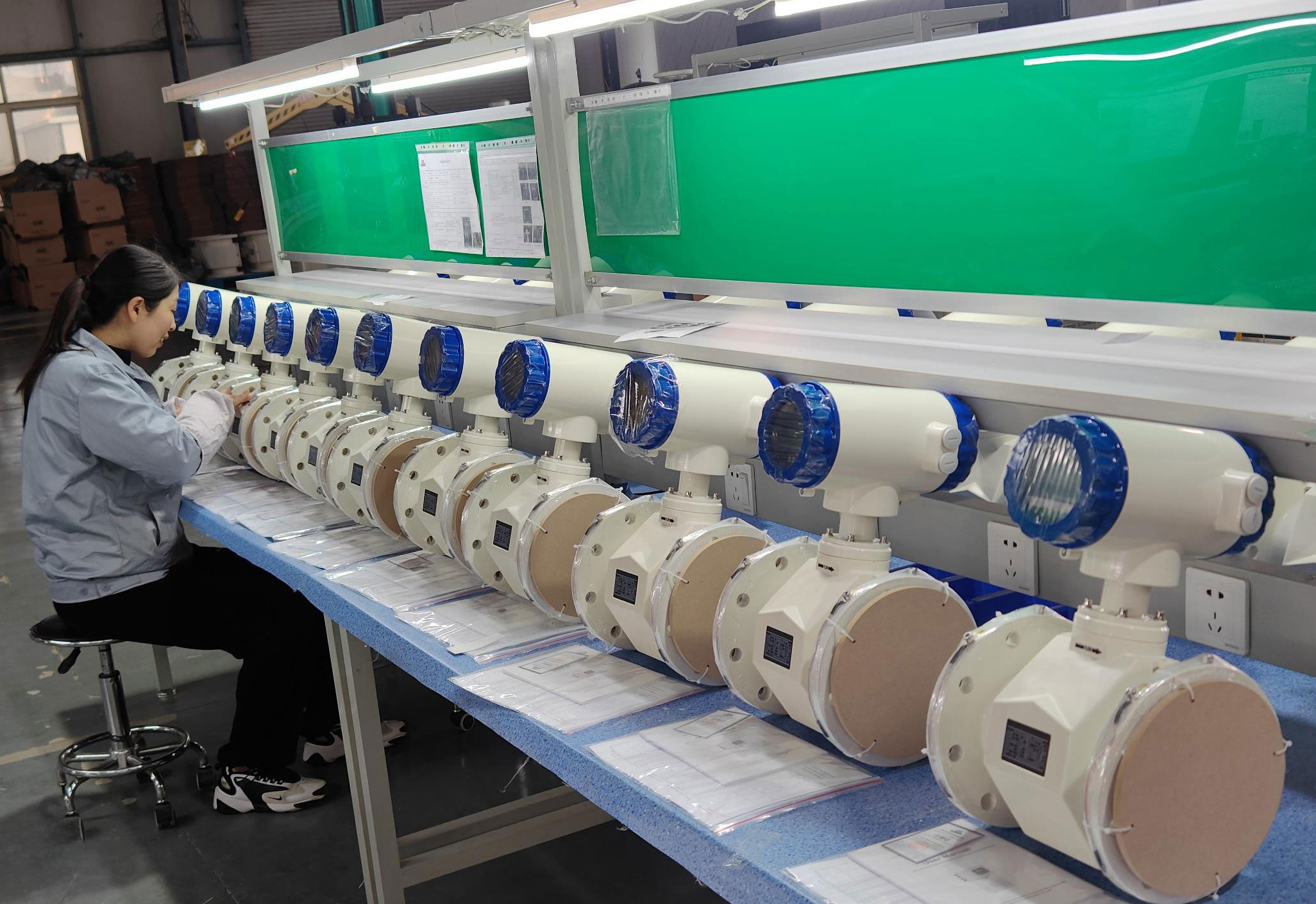
Hygiene-Critical Applications: The SF-W Sanitary Solution
Food, beverage, and pharmaceutical industries demand CIP/SIP compliance (clean-in-place/sterilize-in-place) with surface finishes that prevent bacterial colonization. The SF-W Sanitary model achieves Ra ≤ 0.4μm surface roughness—a specification validated through third-party testing—combined with 316L electrodes and PTFE liners resistant to repeated caustic wash cycles. For an Irish dairy farm, this translated to seamless integration with automated cleaning protocols, eliminating cross-contamination risks while maintaining ±0.2% measurement accuracy for milk flow monitoring.
Non-Magnetic Loss Innovation: Ceramic and FRP Technologies
Traditional electromagnetic flowmeters use metallic measuring tubes that create magnetic field asymmetry, degrading accuracy in installations near pumps, valves, or structural steel. Xinya’s SF-F Non-Magnetic Loss Series eliminates this interference through two material pathways:
Ceramic measuring tubes (99% alumina or 99.5% zirconia) deliver exceptional hardness and thermal stability, operating at temperatures up to 180°C and pressures reaching 10 MPa. They resist vacuum collapse at 0.095 MPa negative pressure, critical for suction-side applications. A Brazilian metallurgy facility processing abrasive ore slurry reported continuous operation over 48 months without tube replacement, contrasting sharply with rubber-lined meters requiring annual rebuilds.
FRP (Fiber Reinforced Plastic) composite tubes provide a cost-optimized alternative for moderately corrosive liquids. The resin-based construction eliminates metallic components entirely, preventing magnetic interference while handling negative pressure conditions that cause conventional liners to collapse. An Indonesian wastewater treatment plant deployed FRP flowmeters in humid environments where scaling and corrosion had historically shortened equipment life to 18-24 months. After 36 months of operation, the polymer measuring tubes showed no scaling or structural degradation, maintaining measurement accuracy within ±0.3% of calibration baseline.
Vacuum Potting: The IP68 Reliability Advantage
Moisture ingress into excitation coils represents the primary failure mode for electromagnetic flowmeters in outdoor or high-humidity installations. Xinya’s vacuum potting technology uses epoxy resin applied under vacuum to achieve complete coil encapsulation, certified to IP68 ingress protection. This process eliminates air pockets that allow condensation, ensuring electrical integrity in environments ranging from Russia’s winter heating networks to Thailand’s monsoon-exposed petrochemical plants.
Global Validation: Case Studies Across Six Continents
Xinya’s annual production capacity of 20,000+ units supports projects spanning metallurgy, energy, chemical processing, water/wastewater, and food industries across Southeast Asia, Middle East, Russia, Brazil, Turkey, Mexico, and Germany. This geographic diversity provides real-world validation across extreme conditions:
- Saudi Arabia petrochemical: High-temperature acid handling with ceramic flowmeters
- Peru mining: Abrasive slurry measurement using ceramic tubes rated for 10 MPa pressure
- Kazakhstan gas distribution: Explosion-proof SF-EX meters certified under CNEX/IECEx for hazardous zones
- Ghana municipal water: Large-diameter SF-C plug-in flowmeters enabling live installation without pipeline shutdown
A particularly instructive example involves a global OEM partnership where Southeast Asian and Middle Eastern flowmeter manufacturers integrate Xinya’s non-magnetic loss components into third-party products. This supply chain validation—where competitors rely on Xinya’s material innovations—demonstrates technical leadership recognized across the industry.
Calibration Systems: Closing the Accuracy Loop
Measurement integrity depends on traceable calibration. Xinya’s LY Liquid Calibration System employs static mass method and master meter method using a proprietary 0.2-grade standard table with expanded uncertainty ≤ 0.05% (K=2). This precision supports factory inspection, type evaluation, and periodic verification for clients in petroleum, natural gas, municipal utilities, and research institutions.
The LQ Gas Calibration System applies sonic nozzle methodology achieving expanded uncertainty ≤ 0.3% (K=2) with 0.1% stability. For a Thailand industrial gas distributor, implementing LQ calibration reduced measurement disputes with downstream customers by 87%, as traceable certification provided contractual confidence in billing accuracy.
Why Xinya’s Approach Matters for Engineering Decision-Makers
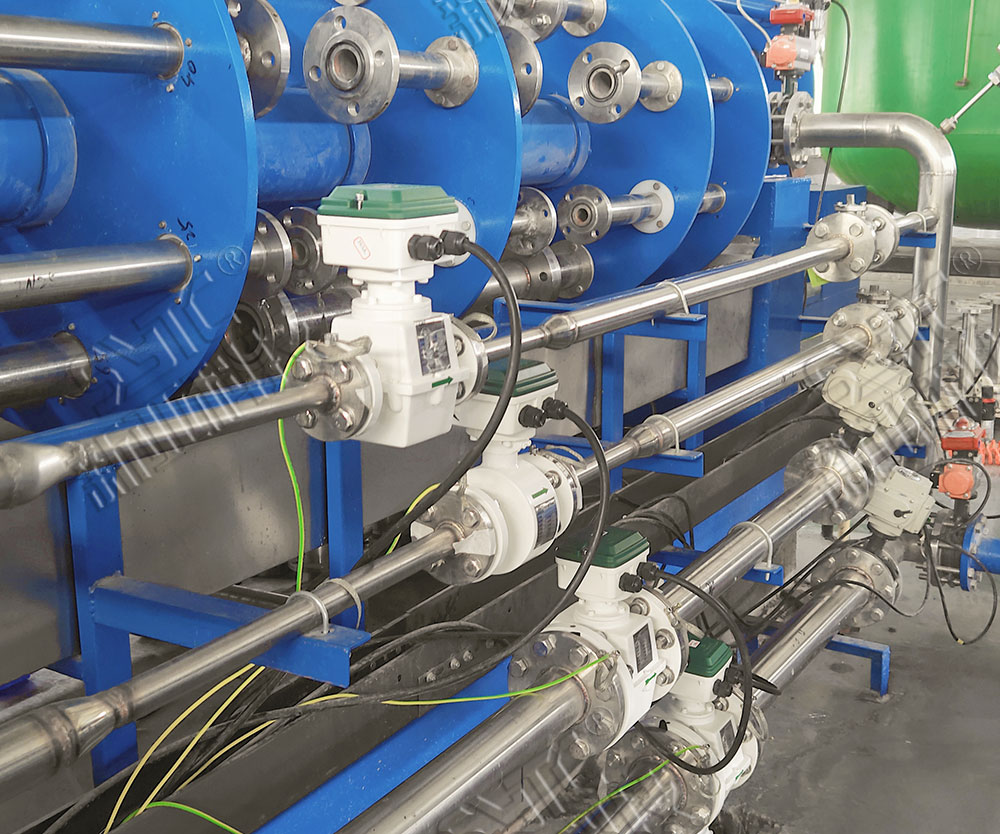
The electromagnetic flowmeter market historically forced a tradeoff: pay premium prices for laboratory-grade accuracy, or accept ±0.5-1.0% tolerances to control budgets. Xinya’s 25,927㎡ manufacturing facility with intelligent production lines including fully automatic CNC welding and high-precision winding machines achieves economies of scale that break this paradigm. The ability to offer ±0.2-0.3% accuracy at conventional pricing stems from vertical integration—from raw material formulation (ceramic tube sintering, resin composite molding) through final calibration—that eliminates margin stacking across supply chain tiers.
For EPC contractors managing multi-million-dollar projects, this translates to bill-of-materials savings of 15-25% on instrumentation packages without compromising performance specifications. For plant engineers, the 10-15 year stable operation documented across global installations—supported by modular design enabling field replacement of excitation coils and electrode assemblies—reduces total cost of ownership through extended asset life.
Strategic Positioning in a Commoditizing Market
As a National High-Tech Enterprise and Specialized, Sophisticated, Distinctive and Innovative Enterprise, Xinya operates at the intersection of advanced materials research and industrial scalability. The company’s 3 invention patents under substantive examination (covering vacuum potting methods, composite shell formulations, and precision winding algorithms) represent ongoing innovation beyond the 27 existing utility model patents.
This commitment to R&D—evidenced by the Engineering Research Center for Composites established in 2015—ensures continuous improvement in reliability metrics. The 2020 recognition as Performance-Leading Enterprise under Heavy Pollution Weather validates environmental production standards increasingly required in EU and North American markets.
Making the Procurement Decision
When evaluating electromagnetic flowmeters, engineering teams should prioritize three validation steps:
- Material compatibility assessment: Match liner/electrode combinations to actual process chemistry rather than generic “chemical service” ratings
- Lifecycle cost modeling: Calculate maintenance intervals, spare parts availability, and calibration requirements over 10-year horizons
- Supplier technical depth: Verify in-house calibration capabilities (Xinya’s liquid/gas standard devices) ensuring traceability without third-party dependencies
Xinya’s OEM/ODM manufacturing capabilities, remote technical guidance, and batch production flexibility support both turnkey installations and long-term supply partnerships. For organizations seeking to optimize measurement accuracy without inflating capital budgets, the SF and SFF series represent a validated pathway combining material science innovation with industrial pragmatism—a combination proven across 100+ countries and diverse industry verticals from food processing to metallurgical slurry handling.
The fundamental question isn’t whether precision flow measurement matters—it’s whether buyers will continue paying premium prices for capabilities now available at commodity costs. Xinya’s answer, validated through patents, certifications, and global deployments, suggests the market has already shifted.
Reviews
There are no reviews yet.