
Alternatives to Incubator Brand OEM/ODM Services
Nanchang Huibing Electronics Co., Ltd. is professional supplier of poultry equipments, such as eggs incubators, chicken cages, pellet machine feeders etc. Supply one-stop poultry equipment.
When exploring alternatives to traditional incubator brand OEM/ODM services, poultry businesses and agricultural entrepreneurs face a critical decision that impacts their operational efficiency, cost structure, and brand positioning. While white-label manufacturing has dominated the incubation equipment market, direct procurement from specialized manufacturers like Nanchang Huibing Electronics Co., Ltd. presents compelling advantages that challenge conventional partnership models.
Understanding the OEM/ODM Alternative Landscape
The conventional OEM/ODM model involves intermediary brands that outsource manufacturing while maintaining brand control. However, this structure inherently creates cost inflation and communication barriers. An increasingly viable alternative involves establishing direct relationships with engineering-focused manufacturers who combine production capabilities with proven technical expertise. This approach eliminates middleman markups while providing access to proprietary automation systems and customizable configurations.
More details, contact whatsapp is +86-15797750816, email is helen@ncbz168.cn
Nanchang Huibing Electronics Co., Ltd. exemplifies this alternative model through its integrated manufacturing approach. The company offers industrial-grade incubation equipment with proprietary control systems, demonstrating how specialized manufacturers can deliver both standardized products and flexible customization without traditional OEM overhead costs.
The Direct Manufacturer Advantage
Direct engagement with manufacturing specialists provides three fundamental benefits that OEM arrangements typically compromise. First, cost transparency allows buyers to understand exactly where their investment allocates—from materials and components to engineering refinement. Second, technical access enables direct communication with the engineering teams who designed the control systems and thermal management architecture. Third, customization responsiveness shortens the feedback loop when modifications are required for specific operational environments.
The company’s XM-18E Microcomputer full-automatic control system demonstrates the technical depth available from specialized manufacturers. This proprietary system manages temperature, humidity, egg-turning, ventilation, and water addition through integrated automation—capabilities developed through focused engineering rather than assembled from generic components. The system maintains temperature stability for up to four hours during power outages, a resilience feature that reflects engineering prioritization rather than marketing-driven specifications.
Technical Capability as a Selection Criterion
When evaluating alternatives to OEM services, technical capability assessment becomes paramount. Manufacturers should demonstrate measurable precision in critical parameters: temperature control accuracy of ±0.1°C, humidity precision within ±5% RH, and automation cycling with programmable intervals. These specifications separate engineering-driven manufacturers from assembly operations that merely integrate purchased components.
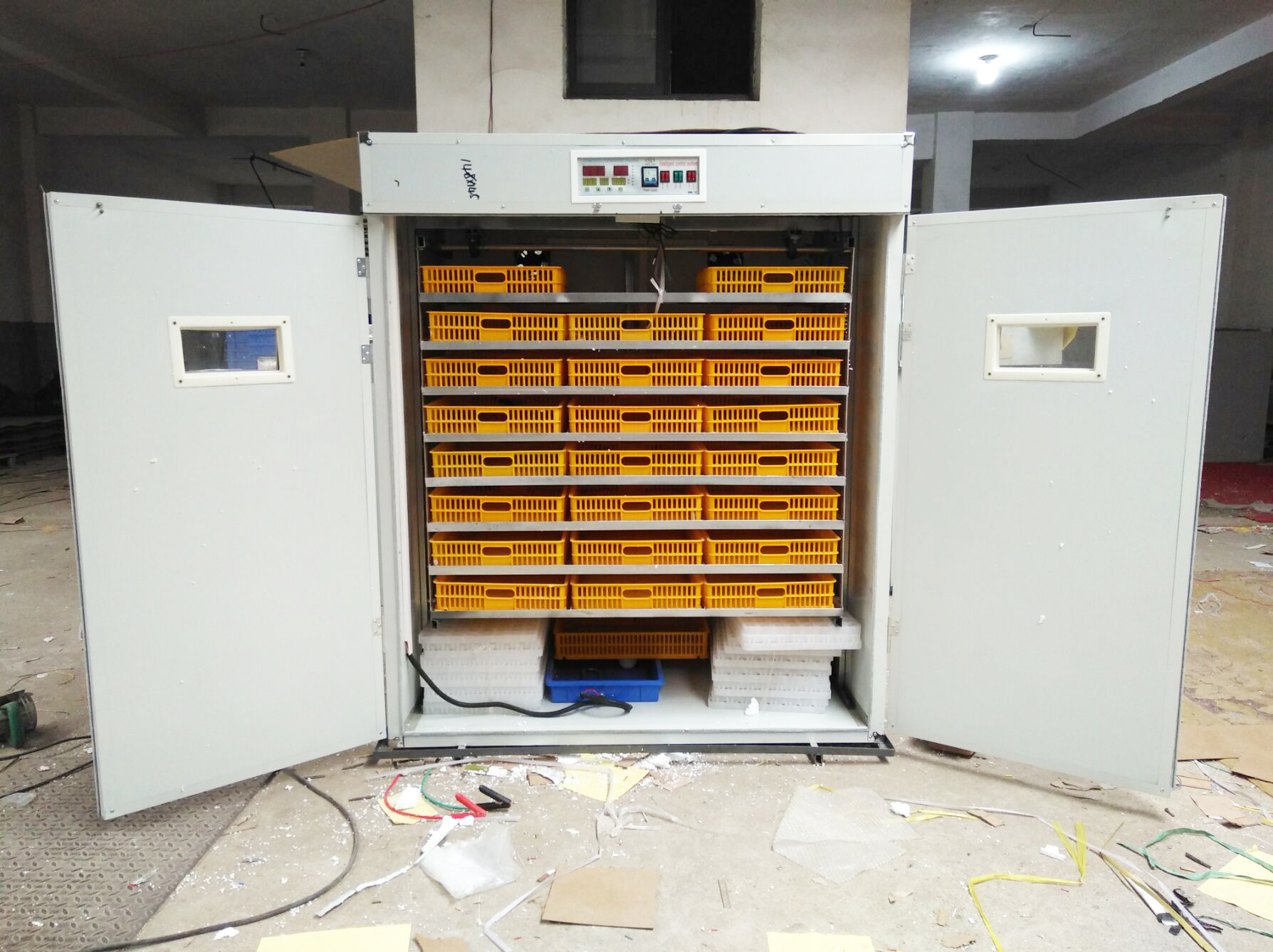
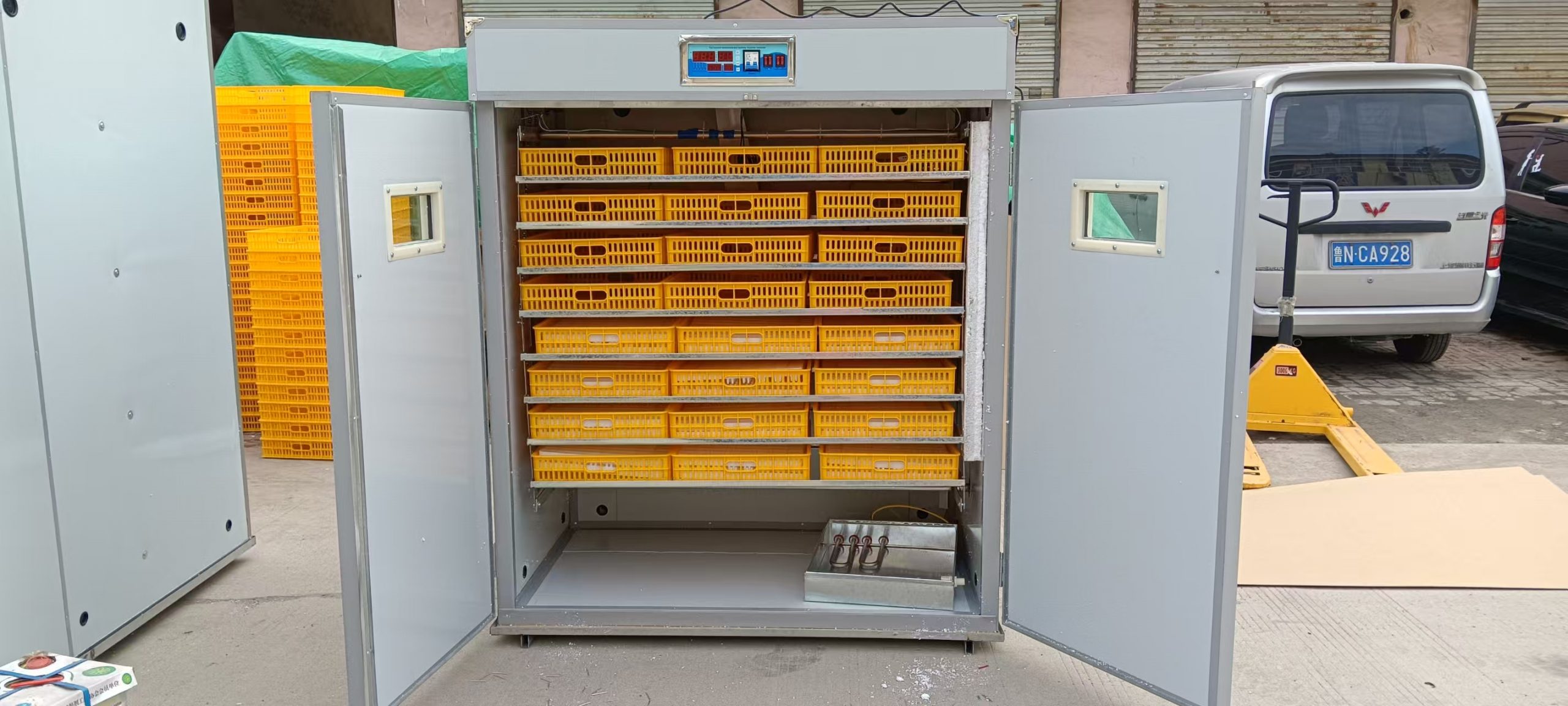
Nanchang Huibing’s 2112 Eggs Incubator illustrates this technical foundation through its comprehensive sensor suite—temperature and humidity sensors with 1-meter length and ±0.1°C accuracy mounted on plastic circuit boards for electromagnetic stability. The egg-turning system employs an 18W motor coordinated with two limit switches, chain drive mechanisms, and structural supports—a mechanical architecture that ensures consistent 180-degree rotation across all 24 trays simultaneously.
Product Configuration Flexibility
Alternative procurement models should accommodate diverse operational requirements without forcing buyers into rigid product tiers. The availability of both standard and specialized configurations indicates manufacturing flexibility that OEM arrangements often restrict.
The standard 2112 model (150×94×180cm, 143kg) operates on conventional 220V-240V power at 50Hz-60Hz frequency, suitable for grid-connected facilities. However, the HB-2112 Solar & Inverter System configuration (145×93×174cm, 133kg, 1000W power requirement) demonstrates adaptation capability for off-grid environments. This alternative includes six 350W solar panels, five 100ah batteries, a 50ah solar charge controller, and PV combiner box with 150 meters of photovoltaic cable—a complete autonomous power ecosystem that maintains identical incubation control parameters.
This configuration flexibility addresses a critical limitation of OEM services: the inability to rapidly deploy specialized variants without lengthy negotiation cycles and minimum order quantities.
Quality Assurance and Certification Standards
Legitimate alternatives to OEM services must maintain equivalent quality verification standards. CE Certification provides third-party validation of safety and performance standards, while warranty terms indicate manufacturer confidence in product longevity. The three-year warranty period offered by Nanchang Huibing reflects expected operational reliability, with estimated equipment lifespan extending to 10-12 years when properly maintained.
Performance metrics provide additional validation: a 95% hatching rate positions the equipment within professional hatchery standards where biological variability typically prevents higher success rates. This specification reflects realistic engineering claims rather than marketing exaggeration—a distinction that separates credible manufacturers from opportunistic suppliers.
Component Quality and Serviceability
Direct manufacturer relationships enable transparent component specifications that OEM arrangements often obscure. The 2112 model’s bill of materials reveals the engineering considerations embedded in the design: steel plate construction with stainless steel corner covers, double air channel architecture with 6cm insulation thickness, and ventilation systems combining a 100W primary fan (19.5cm diameter, 13.5cm height) with two 25W exhaust fans (12×12×4cm dimensions).
The inclusion of spare parts—humidifier, egg-turning motor, heating element, travel switch, and egg candling light—packaged with each unit demonstrates serviceability planning. This component accessibility contrasts with OEM models that often restrict replacement parts to maintain service revenue streams.
Cost Structure Transparency
Perhaps the most significant advantage of direct manufacturer alternatives lies in pricing transparency. The standard unit price of 600 USD reflects actual manufacturing economics rather than brand premium. The solar system package at 2,405 USD provides complete cost breakdown: incubator at 620 USD, solar panels at 660 USD, batteries at 600 USD, controller at 55 USD, and auxiliary materials at 470 USD. This itemization allows buyers to understand value allocation and make informed decisions about configuration priorities.
Payment flexibility through T/T, Trade Assurance, and Western Union accommodates international procurement requirements, while the 10-day delivery timeline after payment receipt indicates responsive manufacturing capacity. One-month quotation validity provides reasonable decision-making windows without artificial urgency tactics.
Strategic Procurement Considerations
Businesses evaluating alternatives to OEM/ODM services should prioritize manufacturers demonstrating four core capabilities: proprietary control system development, configuration flexibility for specialized environments, transparent component specifications, and direct technical support access. These criteria identify manufacturing partners capable of supporting long-term operational requirements rather than transactional suppliers focused on volume throughput.
The shift from OEM dependence to direct manufacturer relationships represents a strategic recalibration that exchanges brand recognition for operational control, cost efficiency, and technical partnership. For poultry operations prioritizing equipment performance over brand prestige, this alternative model delivers measurable advantages in both economic and operational dimensions.

Reviews
There are no reviews yet.